Osaka’s railways are split among six separate companies that do not share ticket gates or fares: JR West, Osaka Metro, Hankyu, Hanshin, Kintetsu and Nankai. Each owns its own lines and its own stations. Switching between them mid-journey usually means walking out through one set of fare gates and into another, and your ticket does not follow you.
Six companies, one city
JR West runs the Osaka Loop Line, the Tokaido-Sanyo Main Line through Osaka Station, and the Yumesaki Line out to Universal Studios Japan. It also operates Shin-Osaka Station, the Shinkansen terminus — a separate building from Osaka Station itself, several kilometres north, and a common point of confusion for first-time visitors.
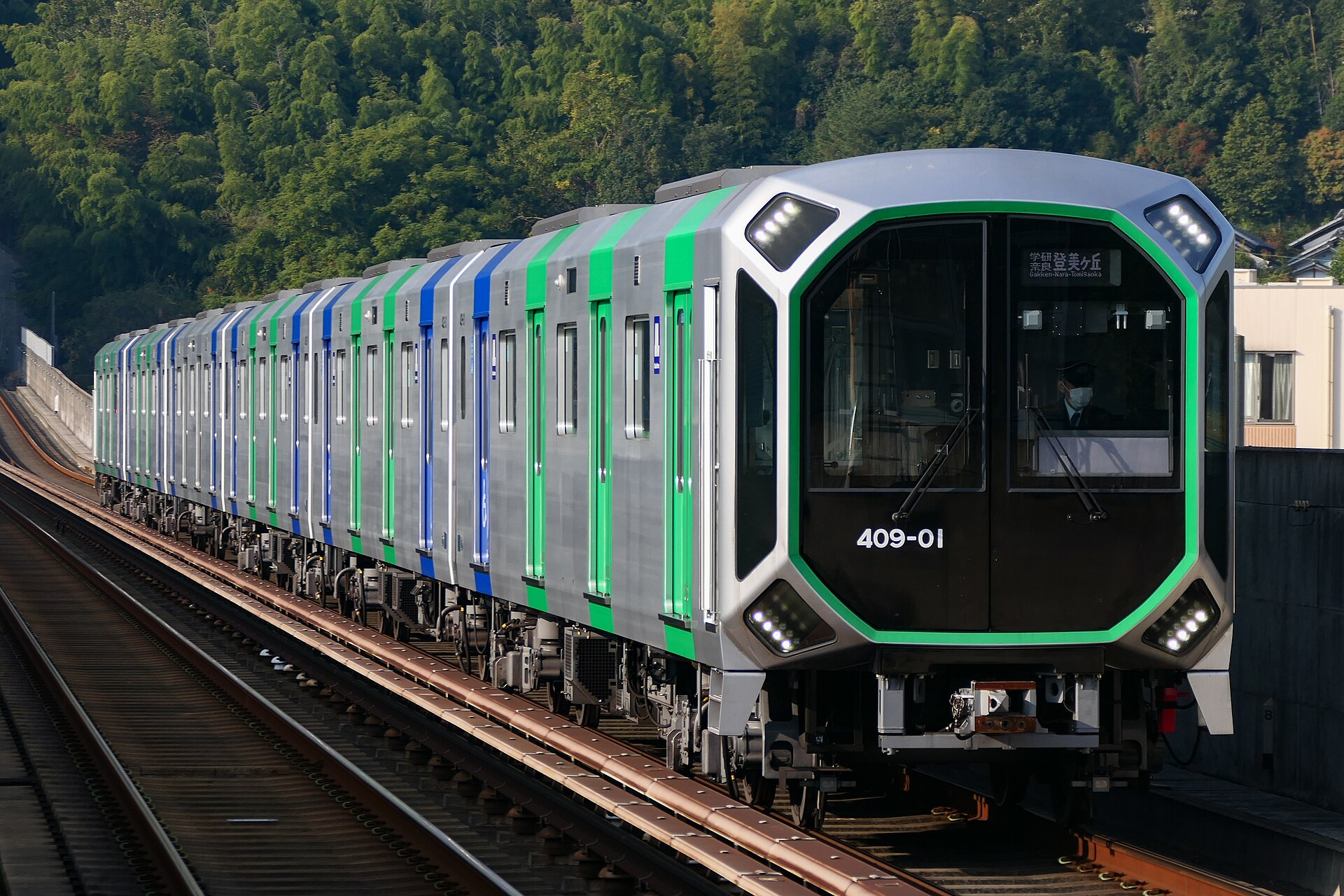
Osaka Metro operates the subway network: the Midosuji Line (the north-south spine linking Umeda, Namba and Tennoji), plus the Chuo, Tanimachi, Yotsubashi, Sennichimae, Sakaisuji and Nagahori Tsurumi-ryokuchi lines. It is a public-sector-descended operator, run by the city, distinct from every private railway on this list.
Hankyu runs three lines out of Osaka Umeda Station toward Kyoto, Kobe and Takarazuka. Hanshin also starts at Umeda but heads to Kobe along the coast. Keihan connects Yodoyabashi and Kitahama to Kyoto’s Demachiyanagi. Kintetsu runs from Osaka Namba and Uehonmachi toward Nara and further into Mie Prefecture. Nankai runs from Namba to Kansai Airport, and separately up toward Koyasan.
Why the split matters more than it looks
Each of these six is a distinct company with its own fare table. An IC card such as ICOCA works across nearly all of them, tapping in and out at each gate — our guide to how an ICOCA card works and where it stops working covers the exceptions. But a paper ticket or a single-operator day pass generally does not cross to a competitor’s line. Buy a Hankyu day pass and ride Osaka Metro partway, and you pay for that Metro leg separately, in full.
This is not a minor footnote. It is the single most common way a visitor’s transport budget goes wrong in this city.
Where names collide: the transfer traps
The real difficulty is that several of these companies use the same place name for entirely separate stations. A map that shows “Umeda” or “Namba” once is hiding three or four different fare-gated buildings under one label.
| District | Stations that share the name | What actually happens |
|---|---|---|
| Umeda / Osaka | JR Osaka Station (JR West); Hankyu Umeda Station; Hanshin Umeda Station; Osaka Metro Umeda (Midosuji Line), plus Higashi-Umeda (Tanimachi Line) and Nishi-Umeda (Yotsubashi Line) | Four companies, five named entrances, in one district. Underground passages link them, but each requires its own fare gate and its own tap. |
| Namba | Osaka Metro Namba (Midosuji, Yotsubashi, Sennichimae lines); Nankai Namba; Kintetsu/Hanshin Osaka Namba; JR Namba (JR West, Yamatoji Line) | Four separate operators use “Namba” for four physically separate stations. A ticket bought for one does not carry into the next. |
| Tennoji | JR Tennoji (Loop Line and Yamatoji Line); Osaka Metro Tennoji (Midosuji and Tanimachi lines); Kintetsu’s nearby station is named Osaka Abenobashi, not Tennoji | Kintetsu’s station sits a short walk away under a different name entirely — easy to miss on a route planner that assumes it is the same stop. |
| Kyobashi | JR Kyobashi (Loop Line and Gakkentoshi Line); Keihan Kyobashi; Osaka Metro Kyobashi (Nagahori Tsurumi-ryokuchi Line) | Three operators, adjoining buildings, three separate gate systems and fares. |
| Yodoyabashi / Kitahama | Keihan Yodoyabashi and Kitahama stations connect to Osaka Metro’s Midosuji Line and Sakaisuji Line respectively | A shorter, better-signposted transfer than the others, but still a change of company and fare, not a free walk-through. |
Individual station layouts do change as buildings are renovated, so treat the table above as the pattern to expect, not a guaranteed floor plan — confirm the current layout with the operator or a route-planning app before relying on a tight connection.
What this means for your ticket
Three practical consequences follow from the table above.
- A single-operator discount ticket — a Hankyu day pass, a Nankai airport ticket, a Kintetsu tourist pass — stops paying off the moment you exit its own gates. It does not resume if you re-enter through a different company’s gates nearby, even a few metres away.
- An IC card handles the mechanics smoothly: tap out of one operator, tap into the next, and each fare is calculated and charged separately. It removes the need to buy paper tickets, but it does not merge the fares into one journey price. Our piece on how ICOCA actually works goes through what the card does and does not cover.
- Route planners sometimes show a “same station” transfer that is, on the ground, an outdoor walk between two buildings several minutes apart. Where a connection looks tight, it is worth checking the operator’s own station guide rather than trusting the map alone.
JR West publishes its own network map and fare information on its official site, and Osaka Metro does the same for the subway; Hankyu’s own site covers its three Umeda-origin lines. These are the primary sources for anything specific — a fare, a first or last train time, a station exit number — because that detail changes and this article does not attempt to hold it.
Practical checks before you travel
Anyone building an Osaka itinerary should decide, before setting out, whether a day’s travel mostly stays on one operator’s lines or crosses several. A day built around Osaka Metro’s Midosuji Line — Umeda, Namba, Tennoji — stays inside one fare system. A day that adds a Hankyu trip to Kyoto or a Nankai run to Kansai Airport does not, and needs its own separate fare or pass for that leg.
This ties into a wider pattern covered in our guide to why Osaka still runs so much on cash: ticket machines at smaller private-railway stations do not always take every card type, and knowing which company you are dealing with before you reach the gate saves time. For the wider context of how the city’s transport fits together, our Getting Around archive and the Planning & Practicalities archive both build on the operator distinctions set out here.
Details on how this site is researched and checked are on the About page, and what the site collects from readers is set out in the privacy policy.
Access Osaka is an independent guide written from published, checkable sources. We have not visited the places described here and we do not publish personal recommendations or invented ‘local favorites’ — where something is singled out as notable, we say who says so. Opening times, fares, closures and prices change at short notice, so treat everything here as a starting point and confirm with the museum, operator or venue directly before building a day around it. We give no advice on visas, insurance, health or safety; use your own government’s official guidance for those.