Temples & Shrines
寺社 · JISHA
Shitennoji, Sumiyoshi Taisha and the lane behind the noise. Free to enter, and what is not.
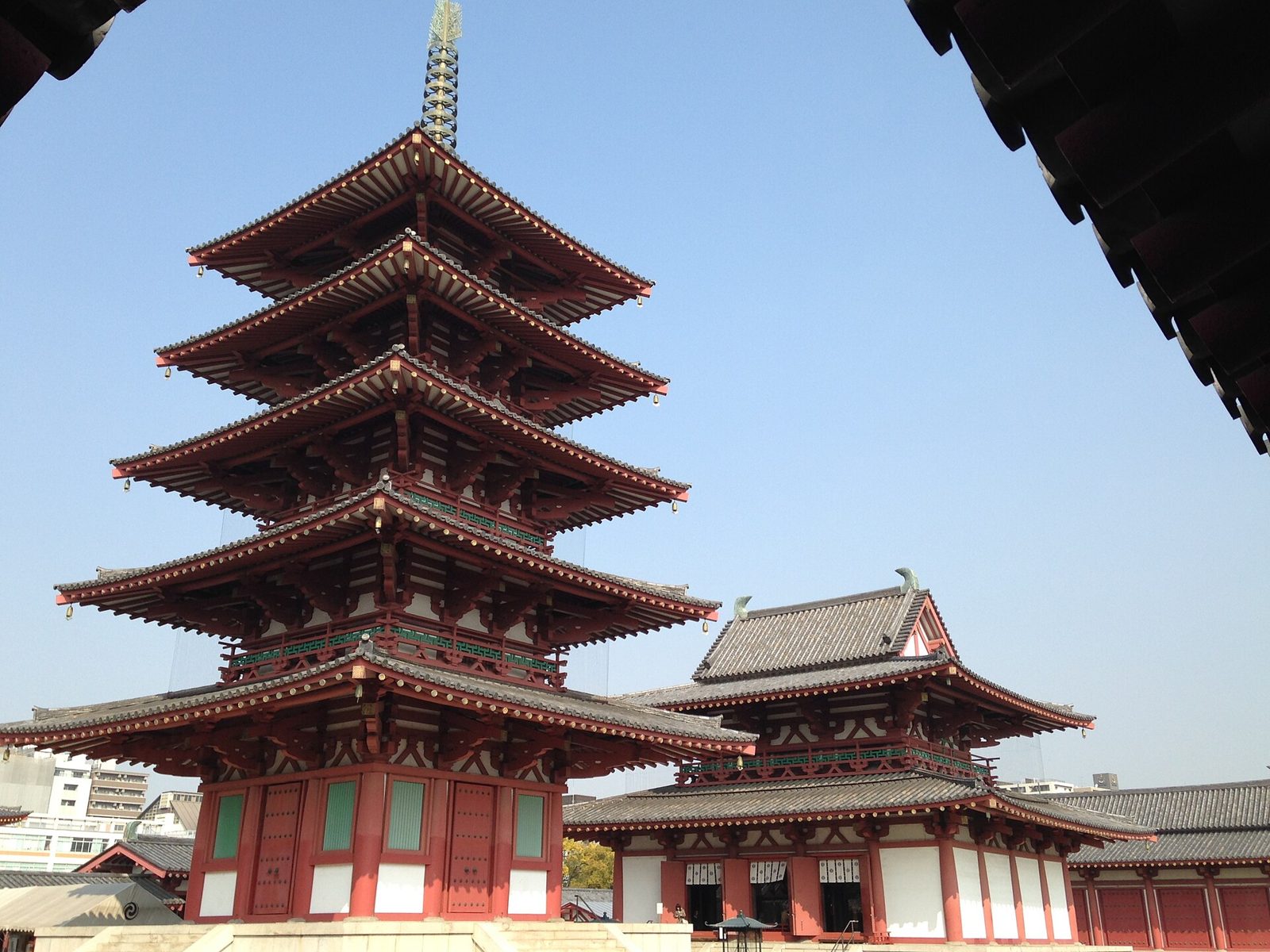

Osaka's religious sites are older than almost anything else in the city and younger in fabric than almost anywhere else in Japan — the two facts sit together because so much was rebuilt after 1945.
The two that matter most
Shitennoji, founded in 593, is by most reckonings the oldest officially administered Buddhist temple in the country. Sumiyoshi Taisha is one of the oldest shrines, in an architectural style that predates Chinese influence entirely.
Free, mostly
Shrine grounds are generally free and open. Temple grounds usually are too, with the central precinct ticketed separately — and often the treasure house and the garden ticketed separately again. Tickets tend to be sold at each gate rather than centrally.
What people get wrong
Almost nothing you are looking at is ancient fabric. Shitennoji's pagoda and main hall are post-war reconstructions in concrete, rebuilt to the original plan. The ancient thing is the layout — a straight line of gate, pagoda and hall — not the material.
This section is being written. The guide above is the section for now. New articles are published across the site about twice a week rather than a section being filled in a day, so this page grows steadily — it is worth looking in again. In the meantime the sixteen sight pages and the plans by trip length are finished, and they are the best place to start.
Coming next in this section
- What is the difference between a temple and a shrine, practically?
- What happens at Shitennoji on the twenty-first of the month?
- What is Sumiyoshi Taisha, and why is its architecture unusual?