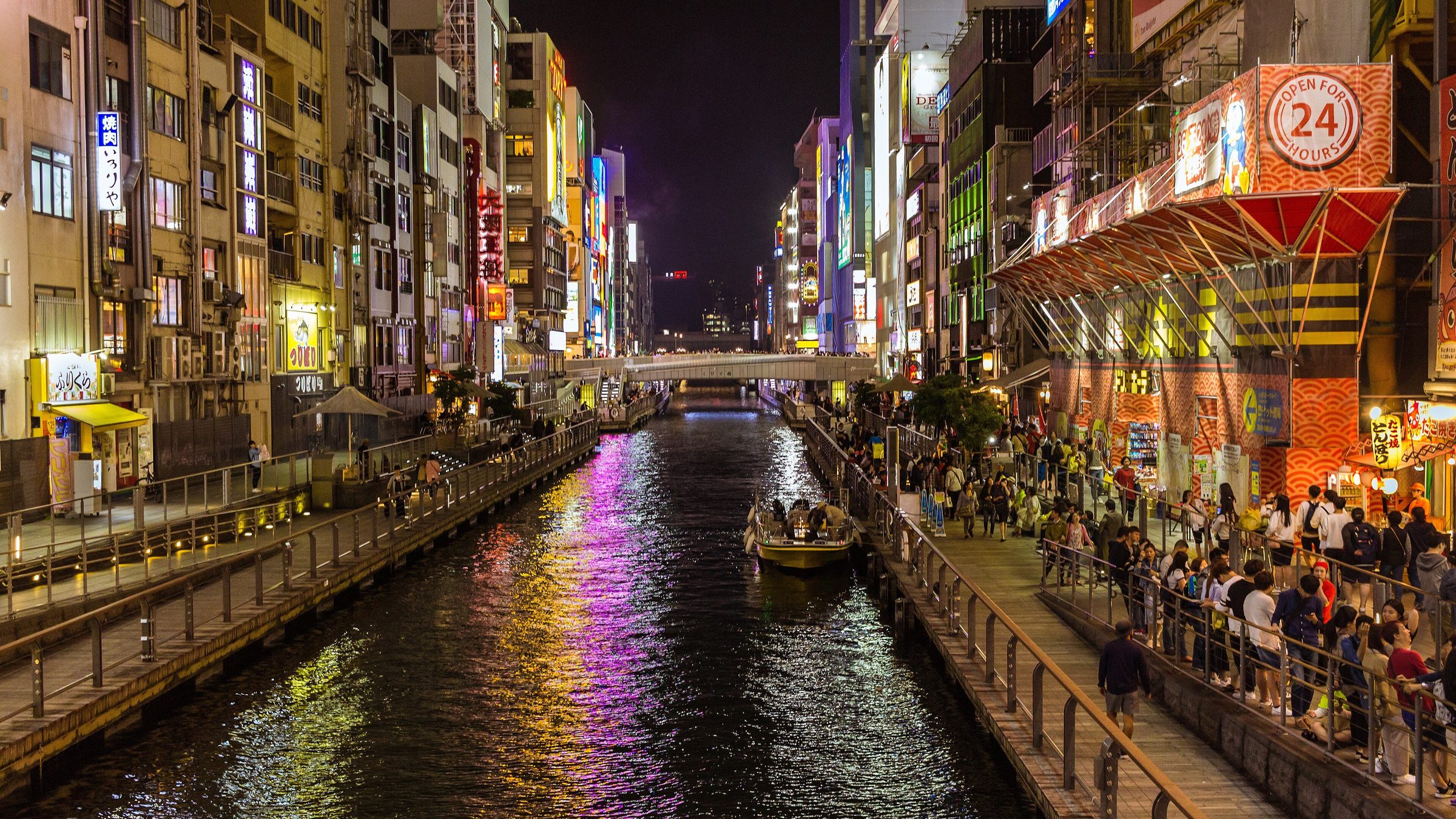
A city that charges almost nothing to look at
Osaka is cheap to see and expensive to eat, which is the right way round. We write what is checkable, name the office that decides it, and date every figure.
Photograph by Ray in Manila, Wikimedia Commons, CC BY 2.0

Ward count: Osaka City. The Osaka Castle keep was rebuilt in reinforced concrete in 1931. Kuidaore is the city’s own word for ruining yourself by eating. Checked 5 September 2026.
Where things live
Eleven sections, set the way Dotonbori sets a shopfront: the number enormous, the name louder than the explanation, and the answer at the end of the board.
Sixteen sights, and what each one costs
Ten of the sixteen are free. You pay to go up, to go in, and above all to eat.
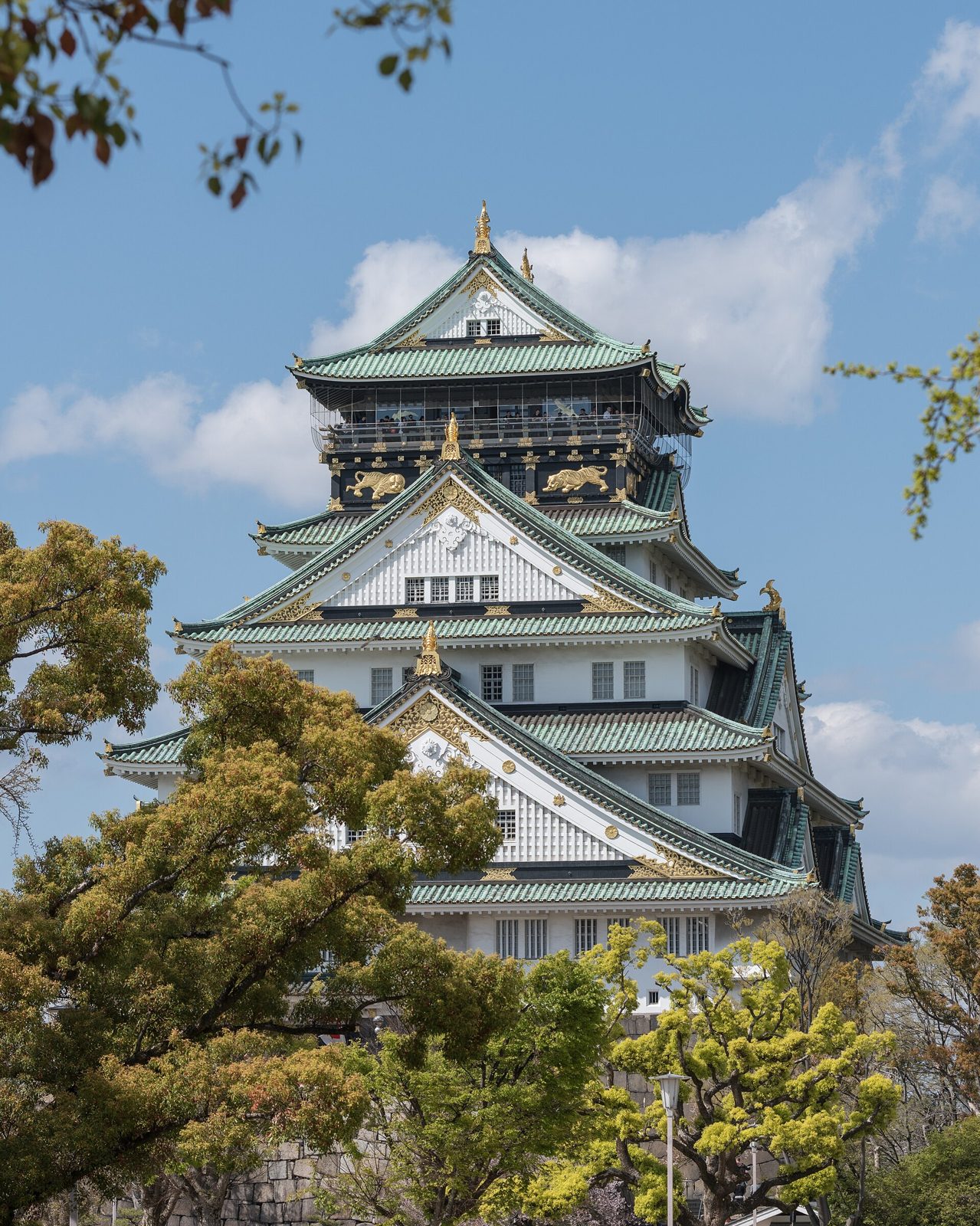 Osaka CastlePark free · keep ticketed
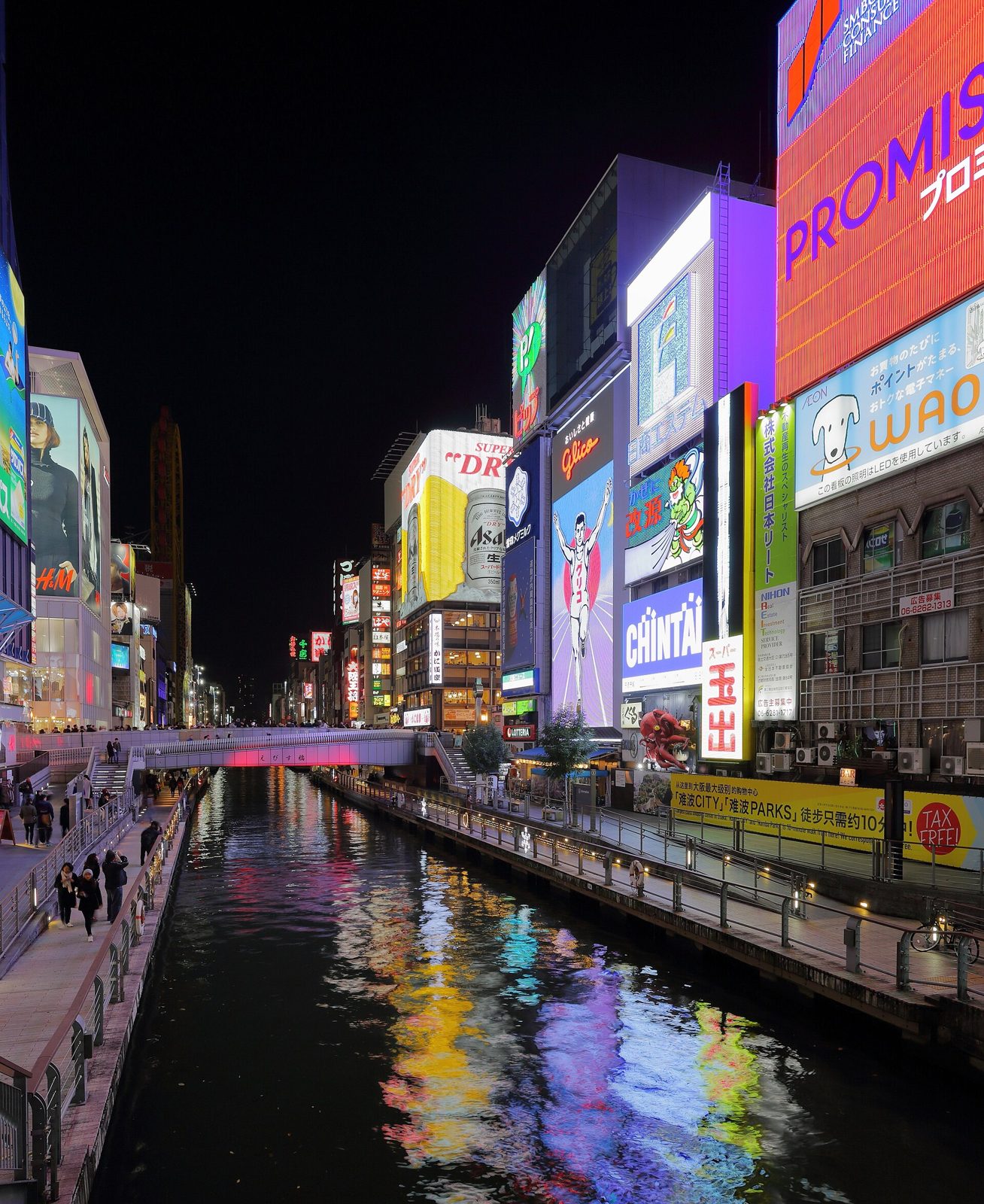 DotonboriFree · louder after dark
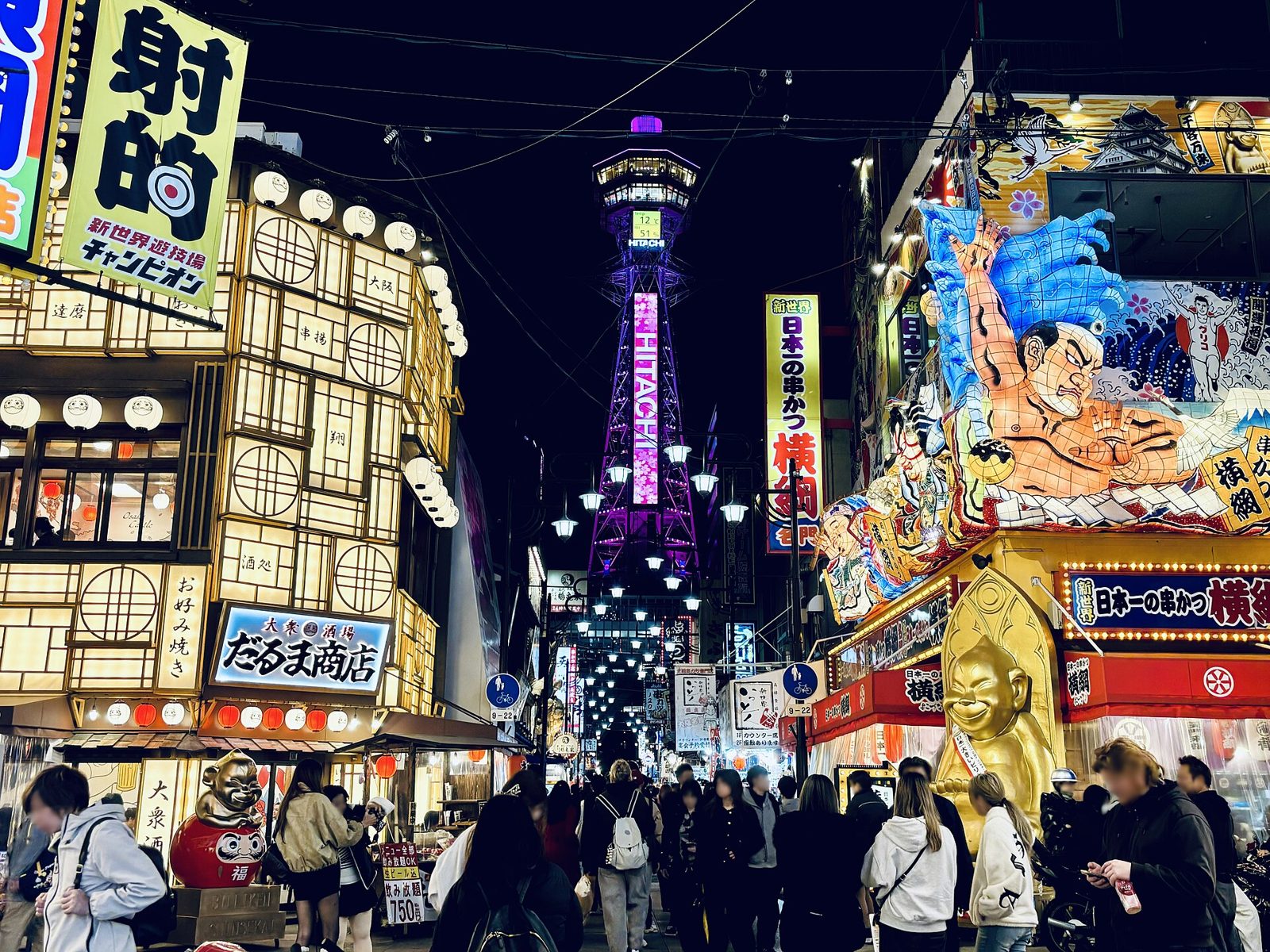
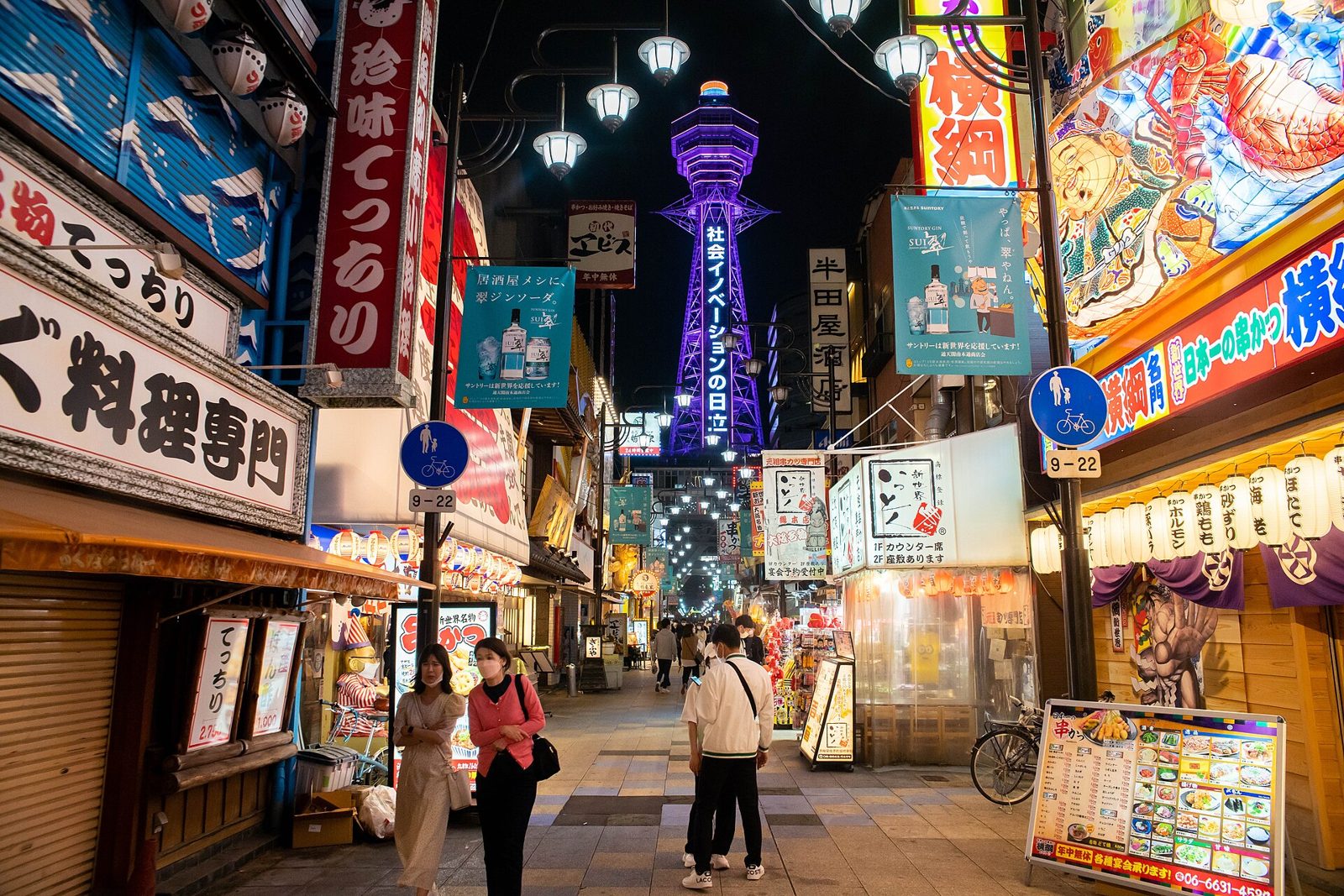 Shinsekai and TsutenkakuStreet free · tower ticketed
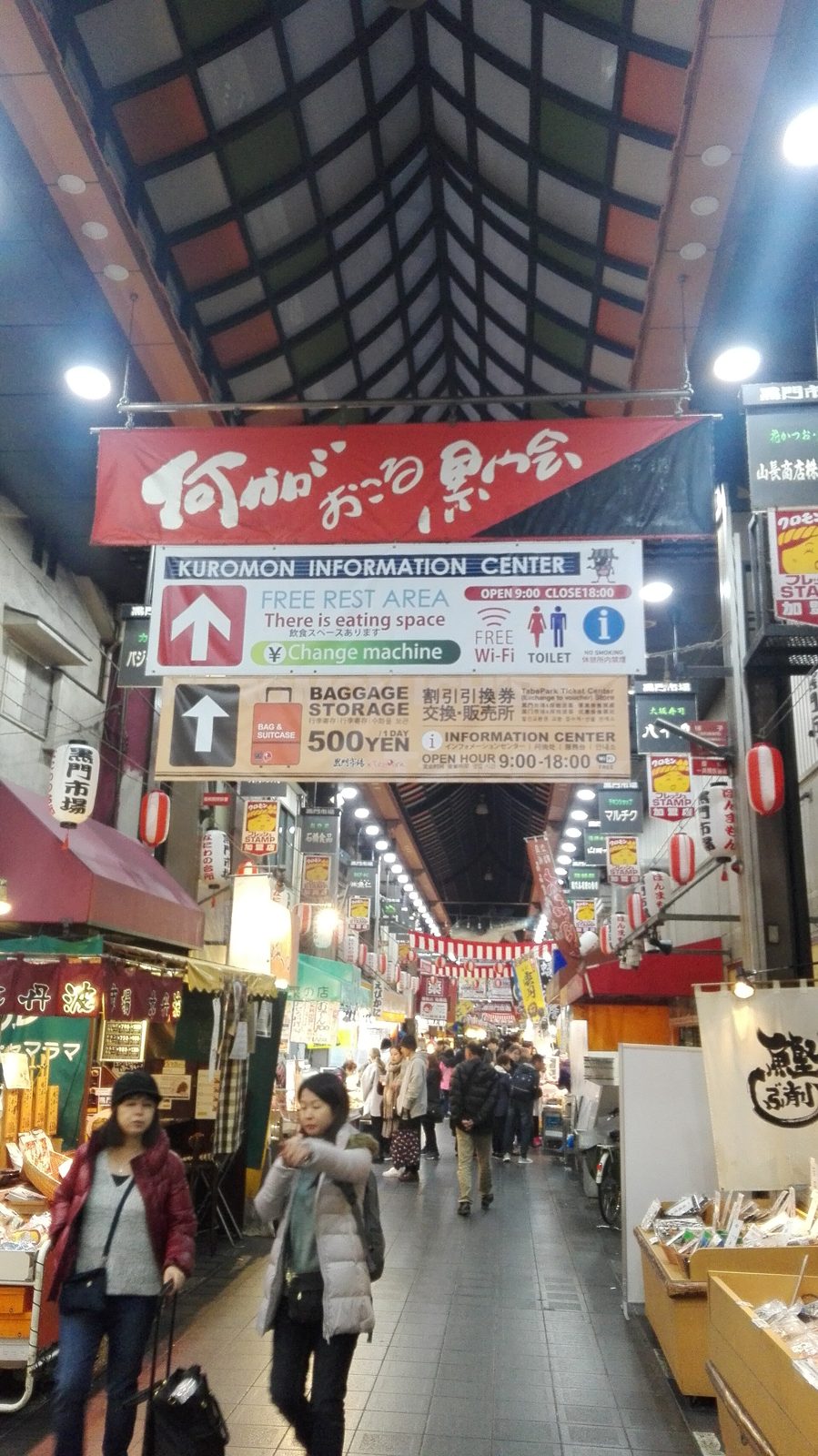
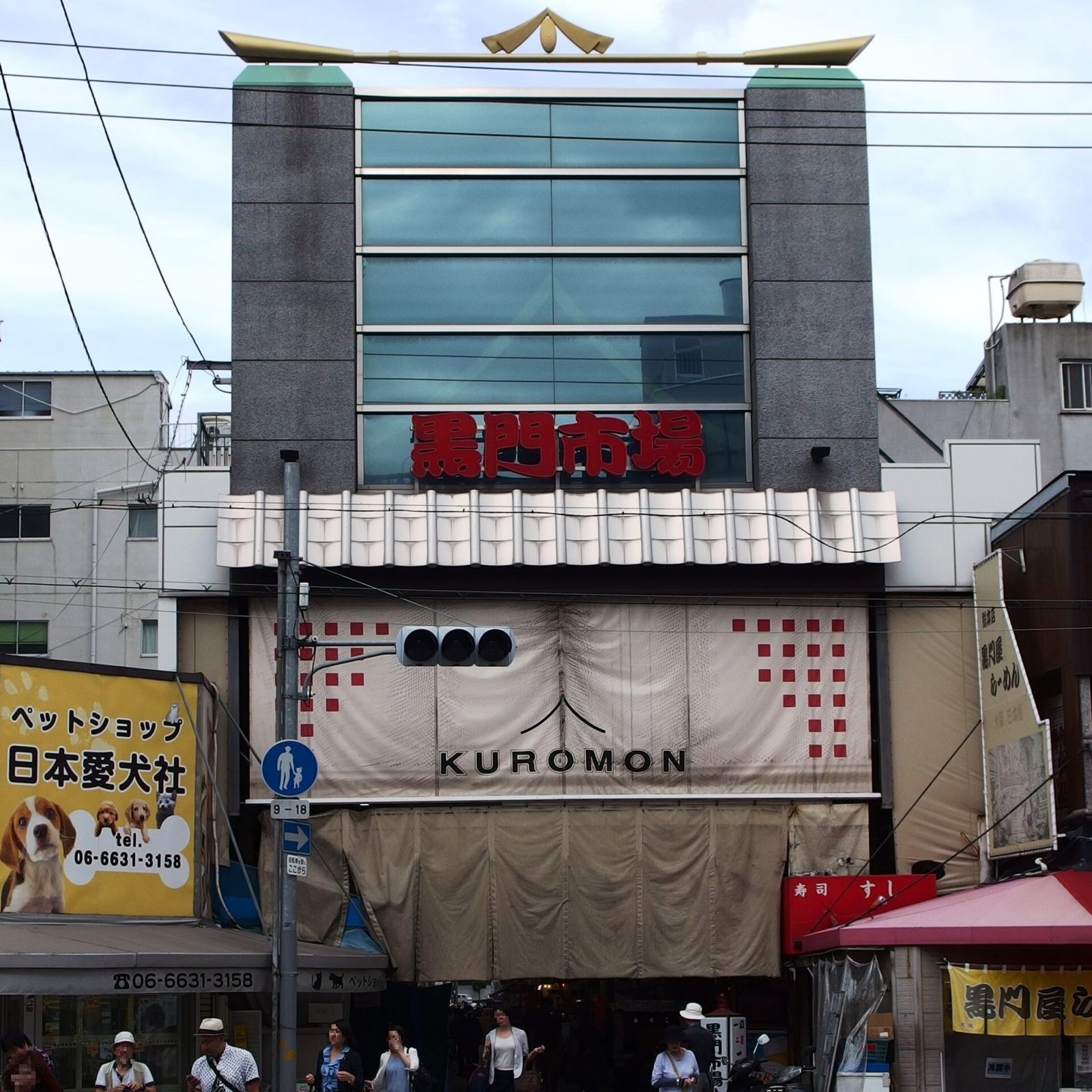 Kuromon Ichiba MarketFree · eat as you go
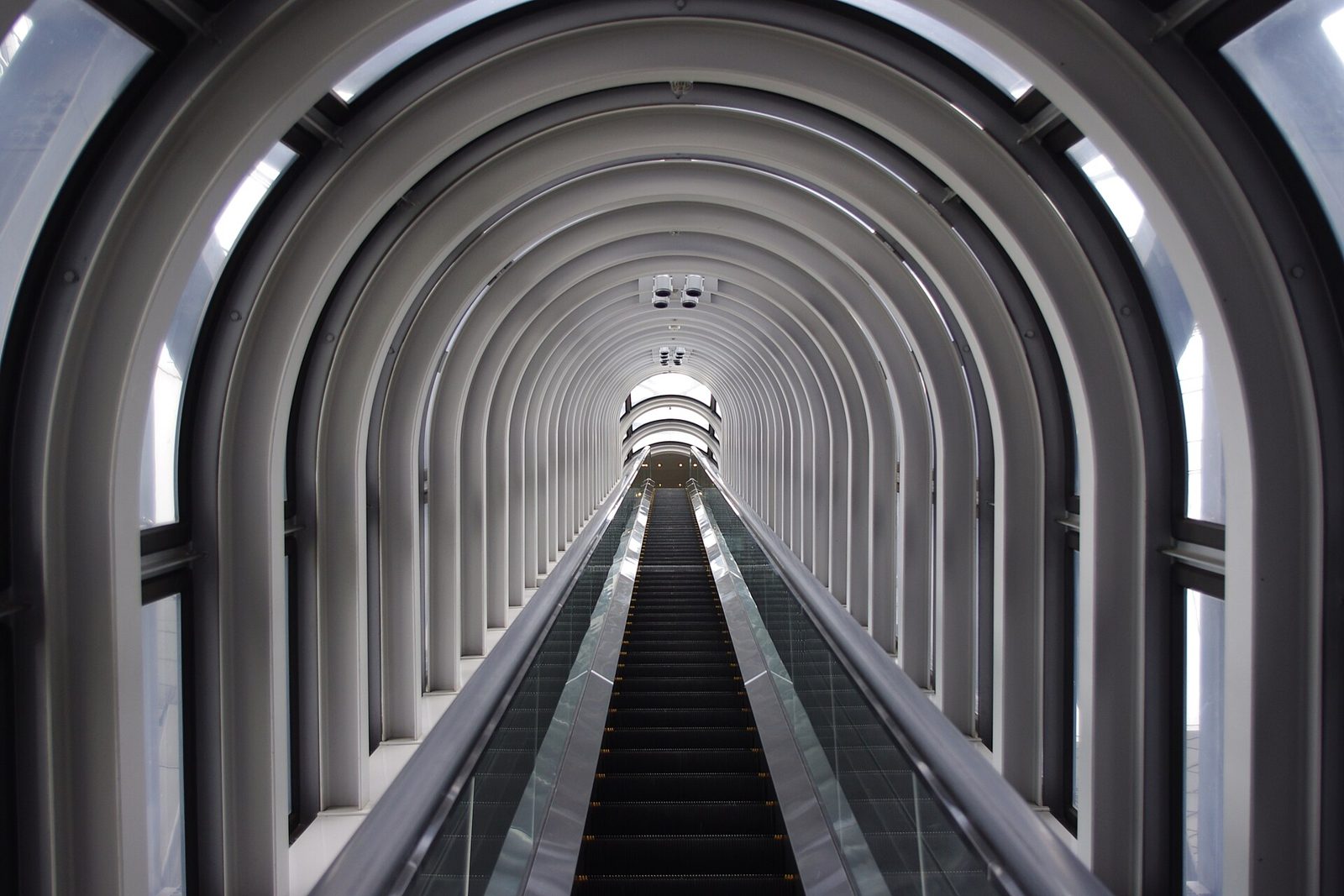 The Umeda Sky BuildingTicketed · the best skyline
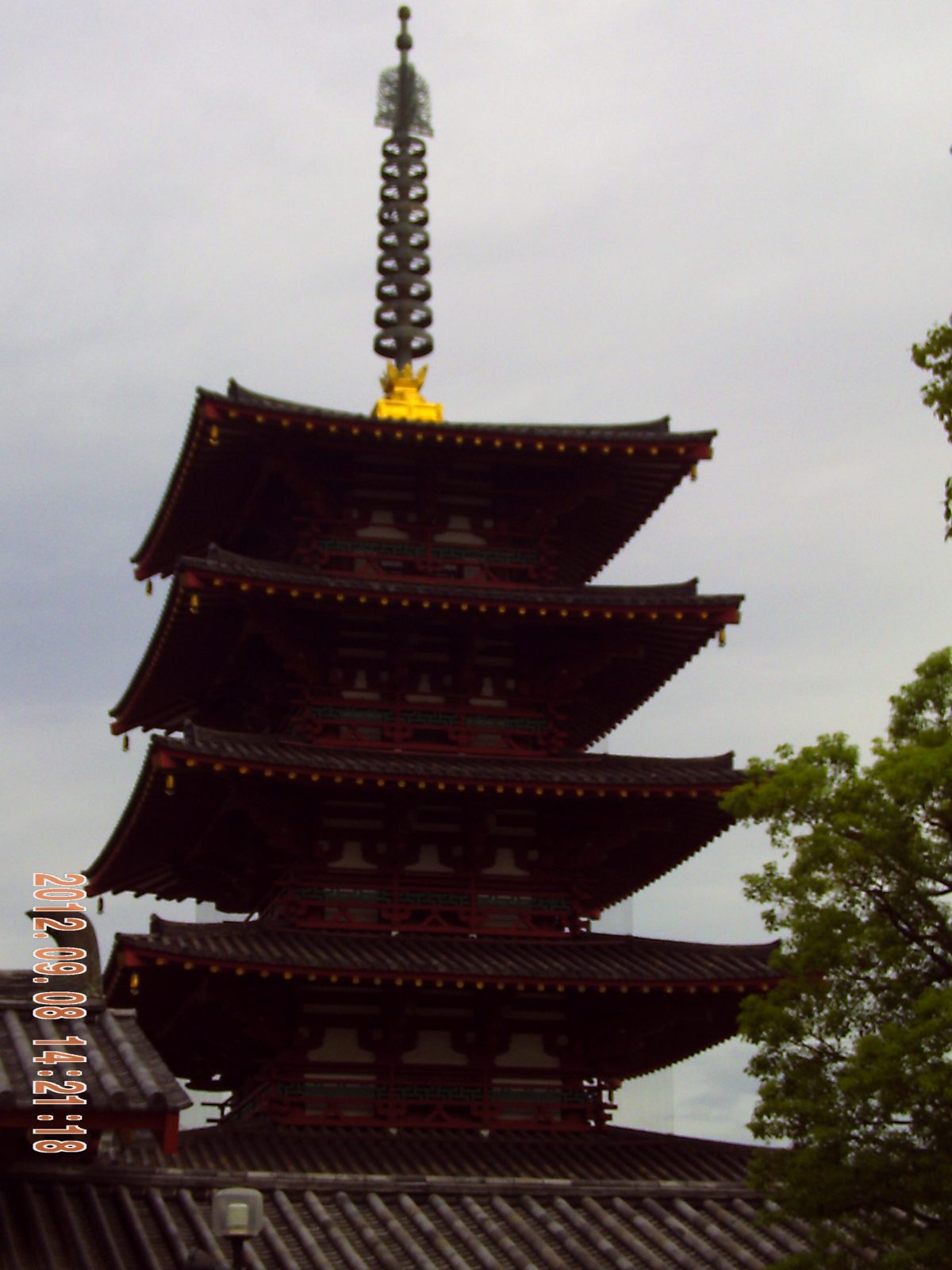 ShitennojiGrounds free · inner precinct ticketed
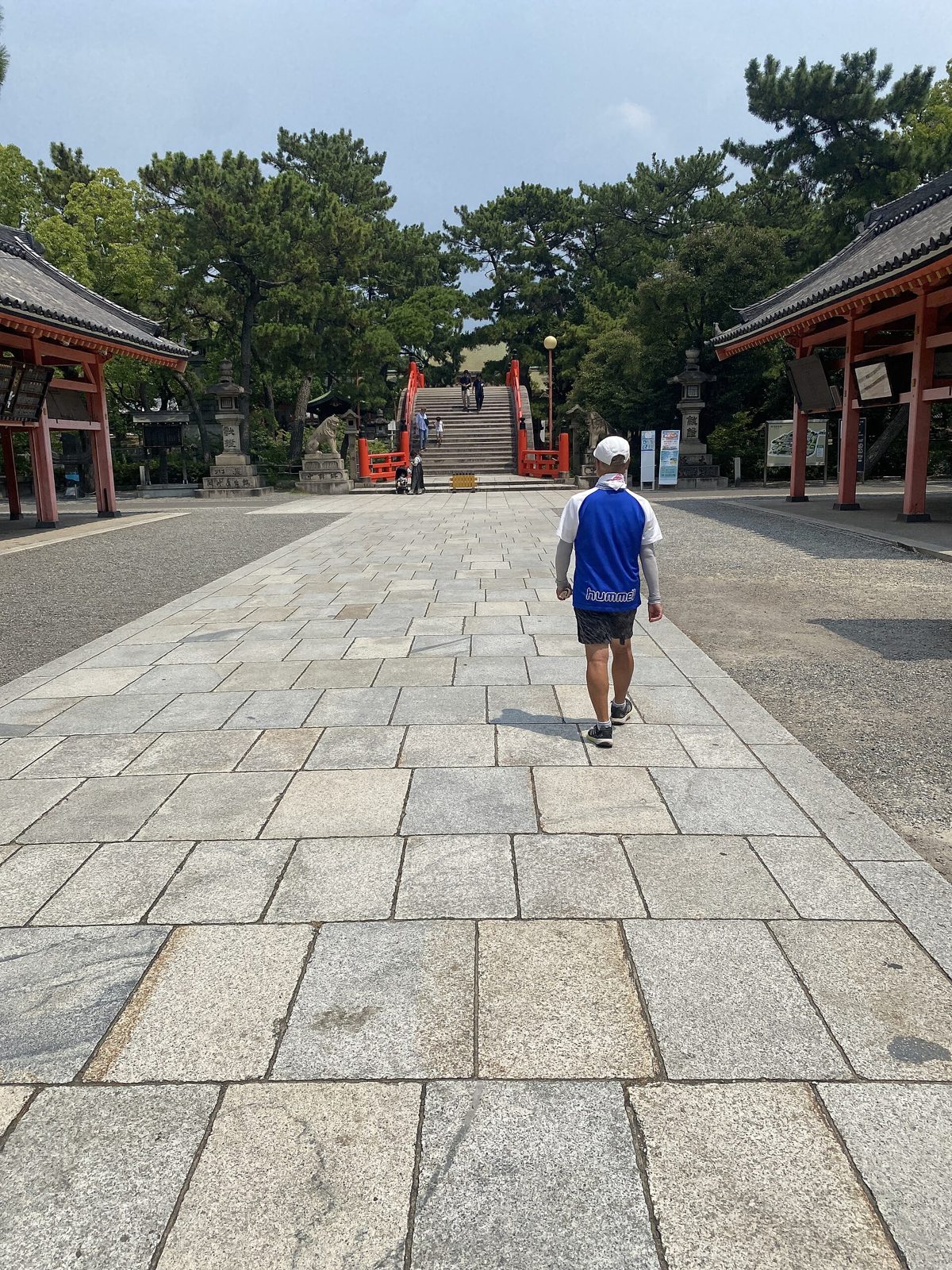 Sumiyoshi TaishaFree · the bridge is the picture
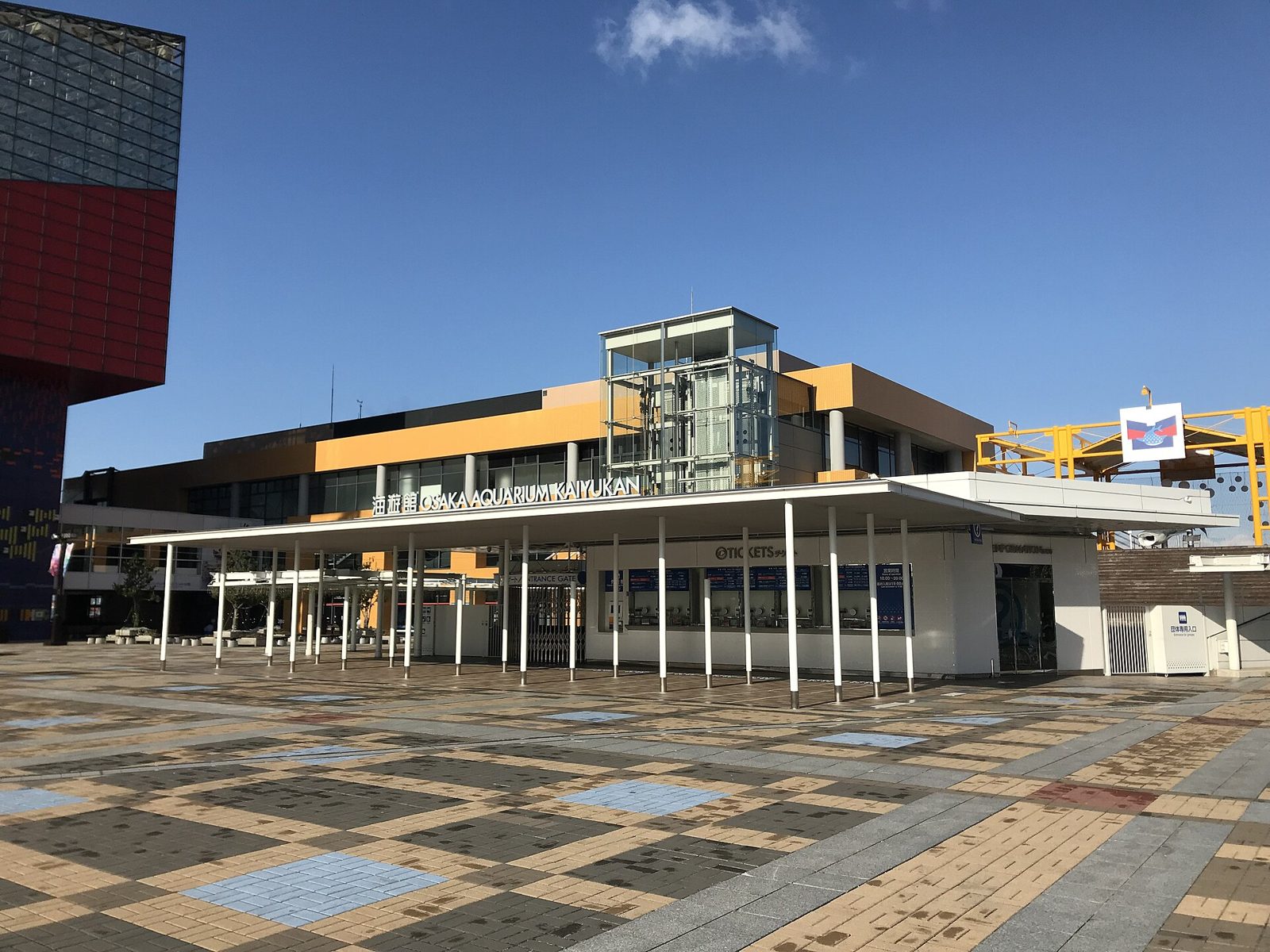 Osaka Aquarium KaiyukanTicketed · book a slot
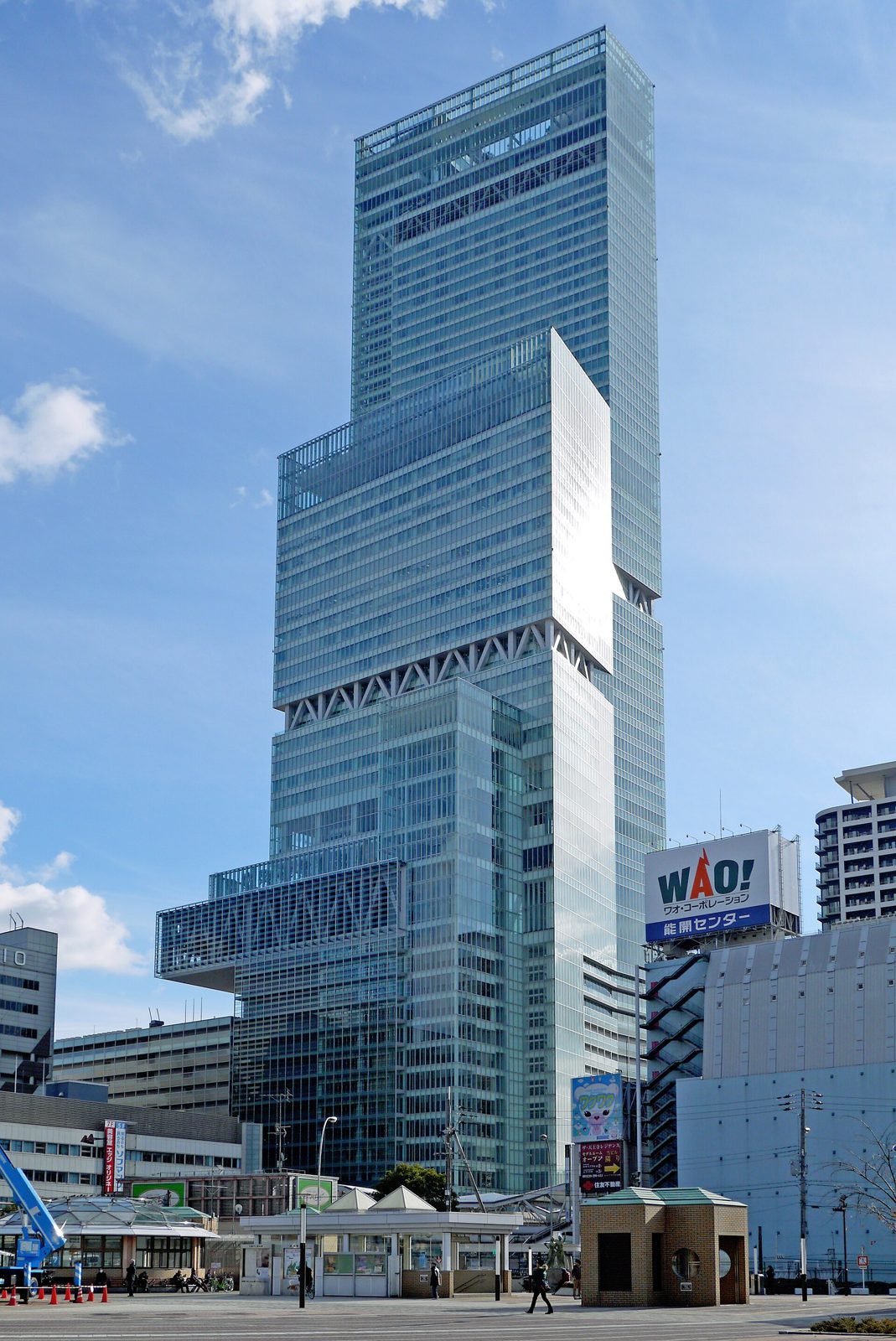 Abeno HarukasTicketed · Japan's tallest building
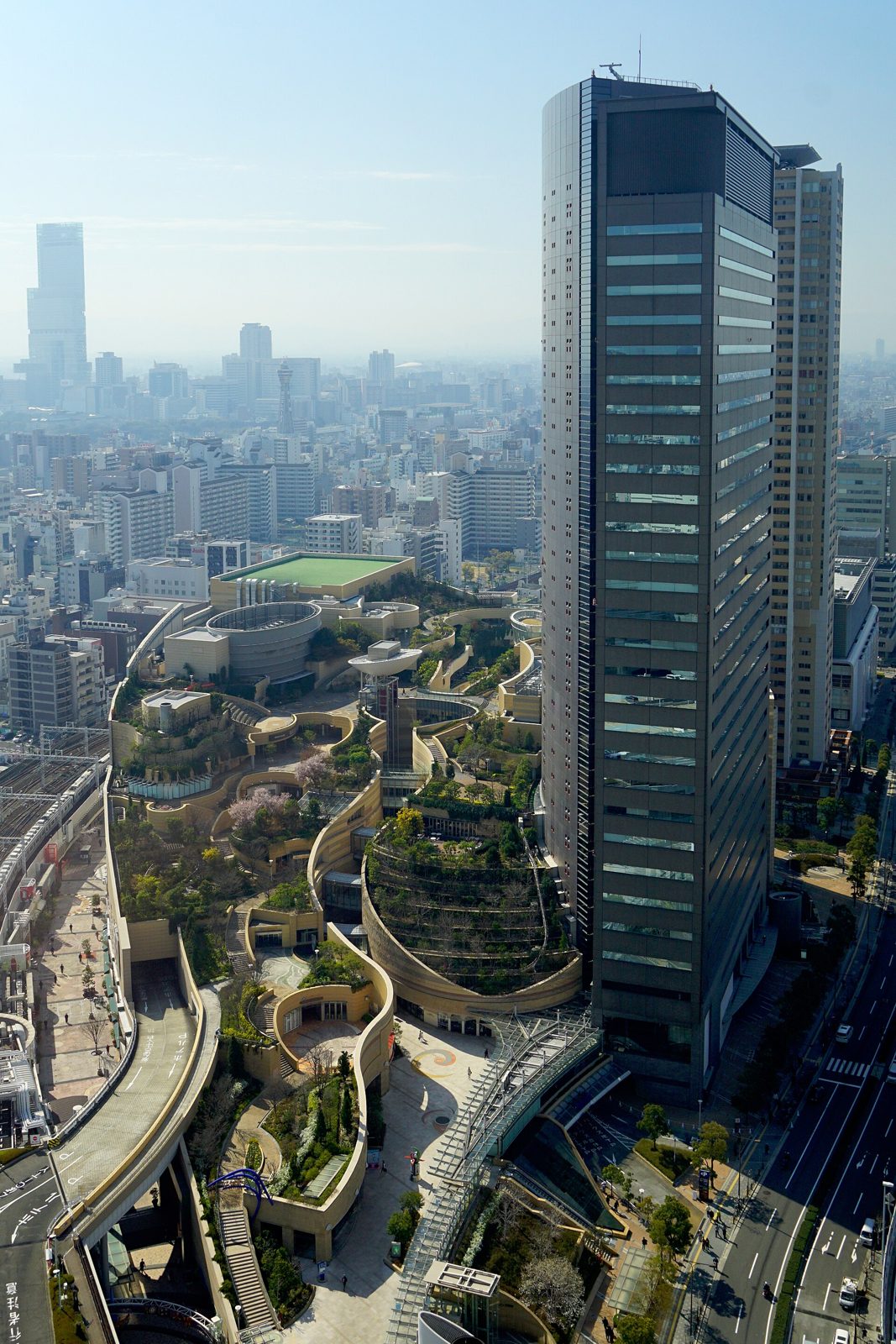 Namba and AmerikamuraFree · the other centre
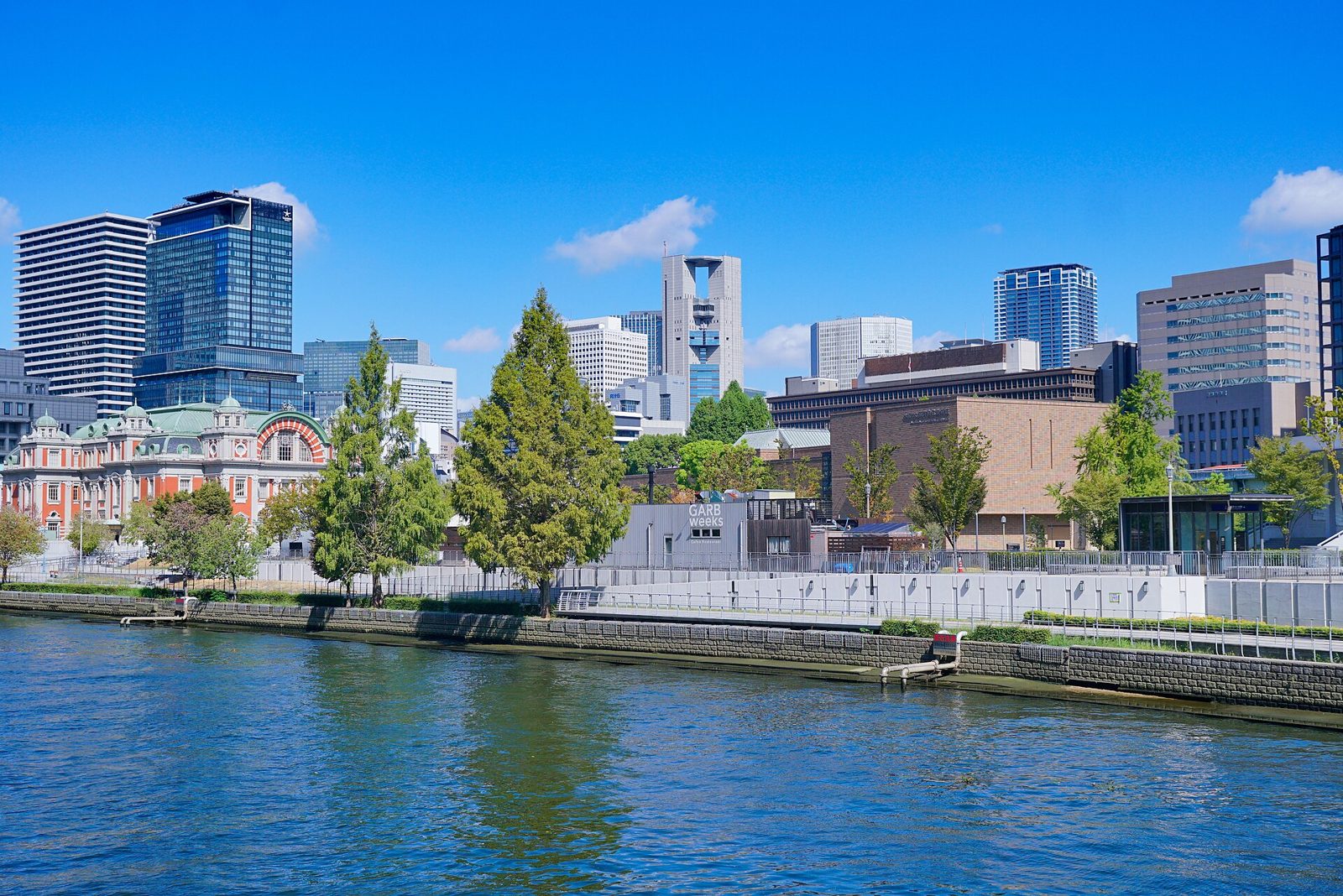 NakanoshimaFree to walk · museums ticketed
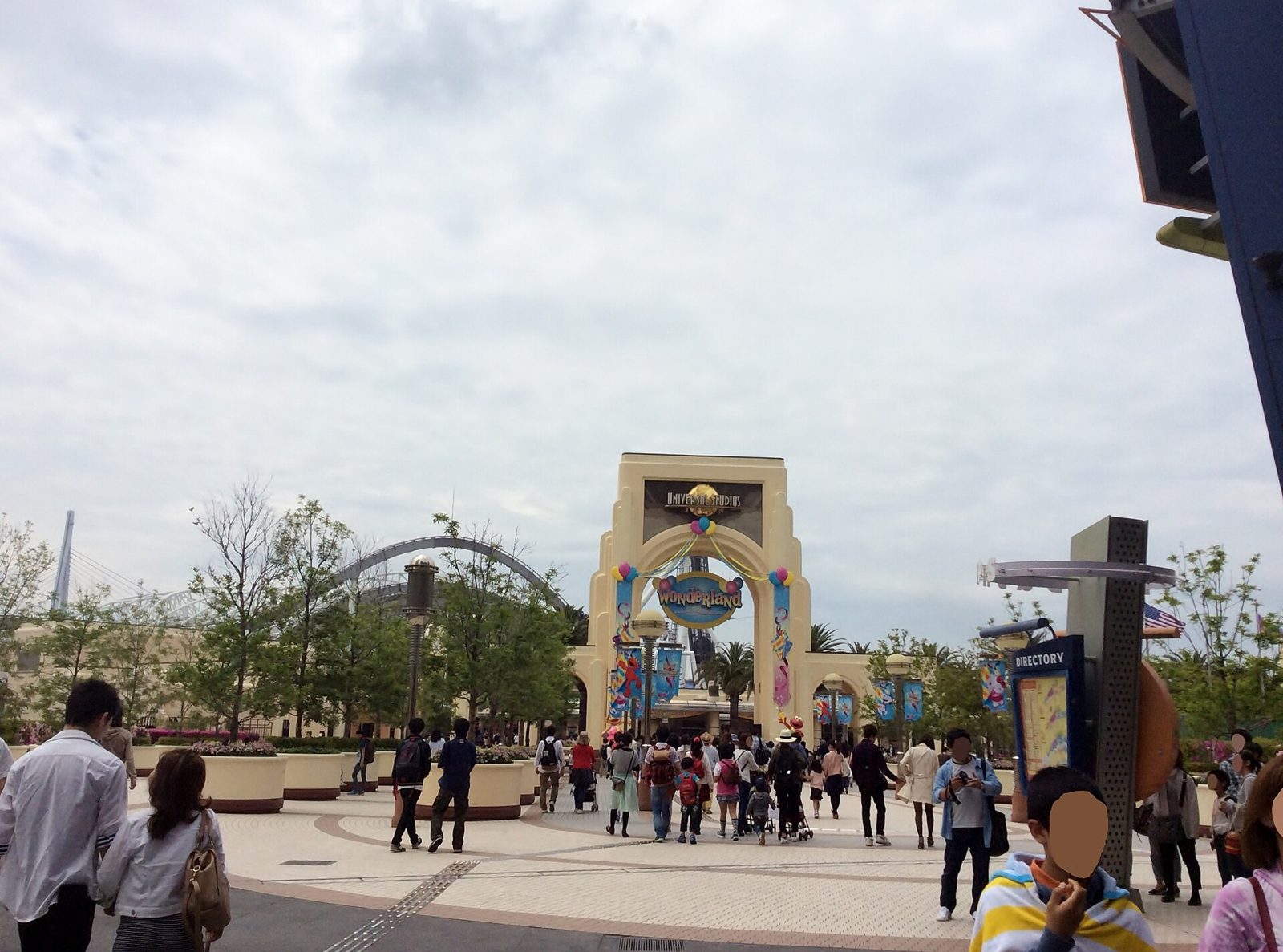 Universal Studios JapanTicketed · a full day, booked ahead
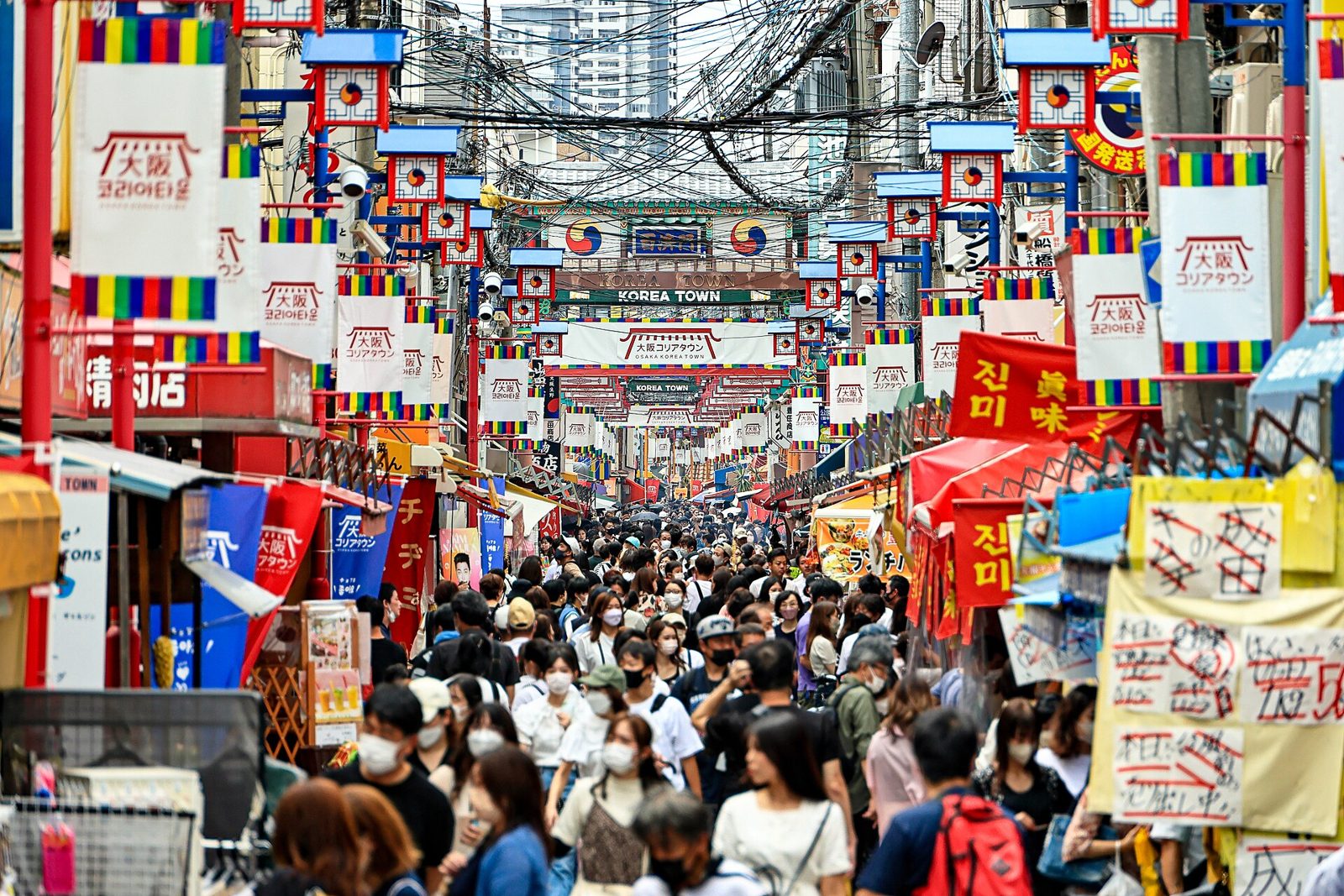 TsuruhashiFree · Osaka's Koreatown
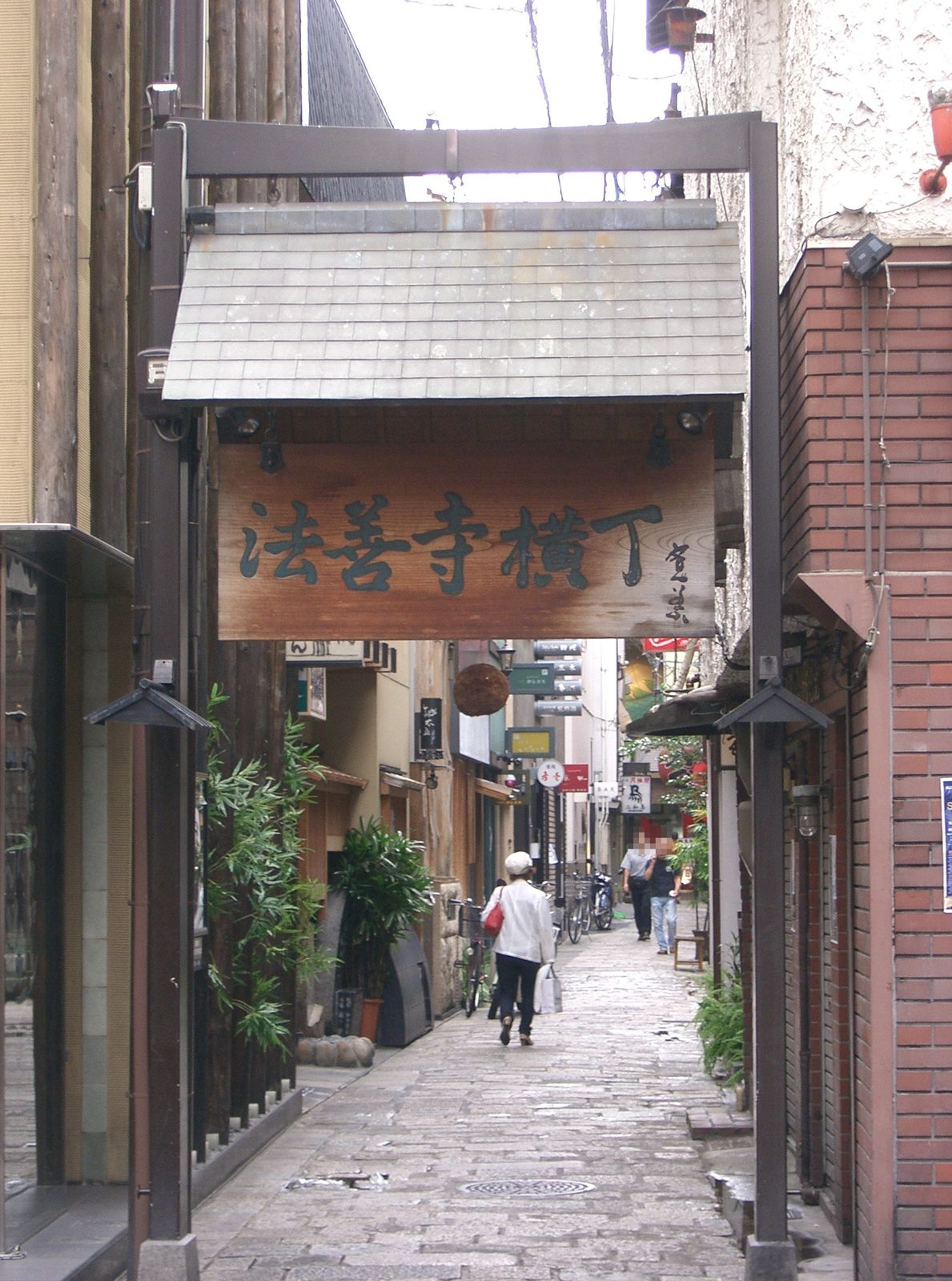 Hozenji YokochoFree · one lane off the noise
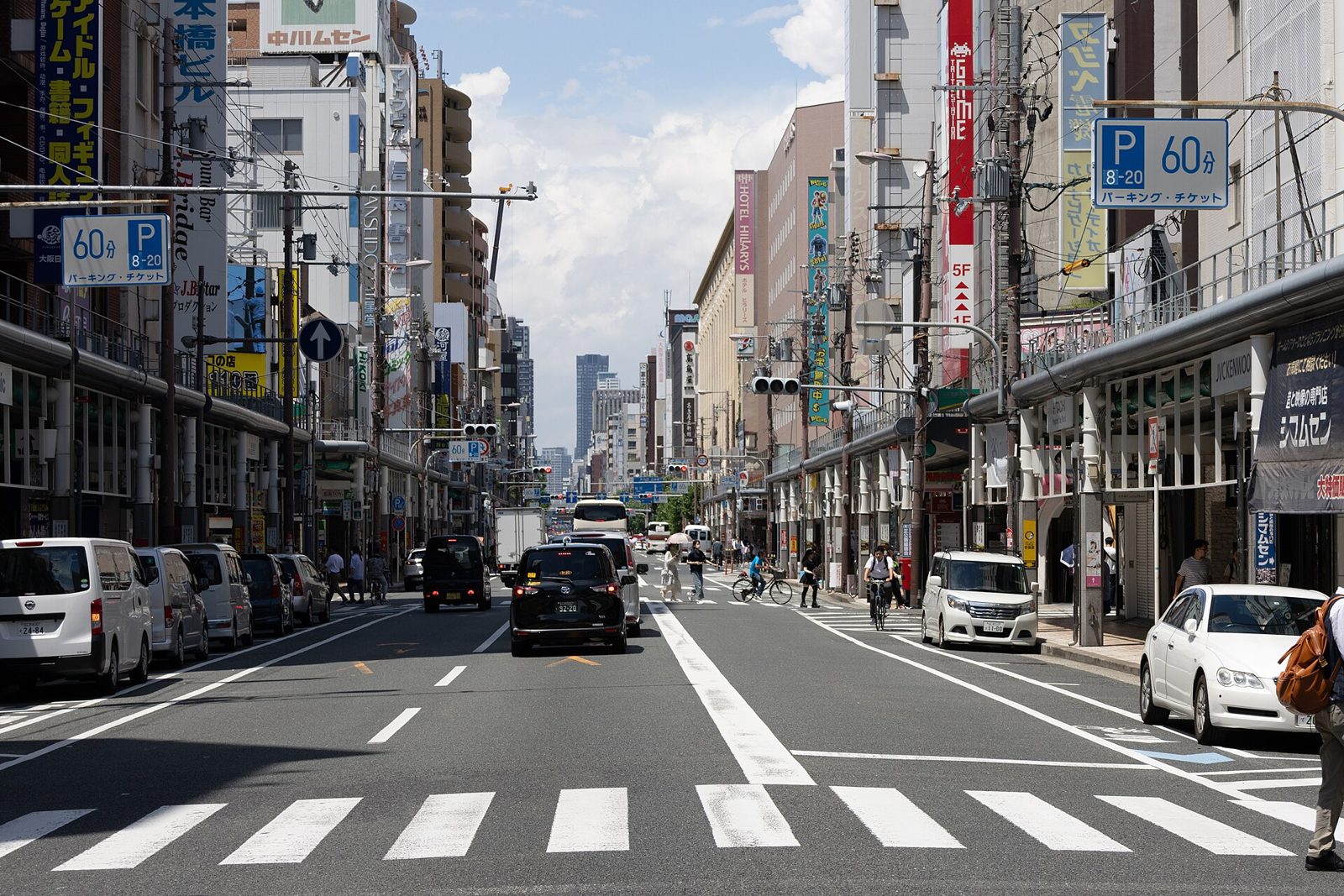 Den Den TownFree · electronics and anime
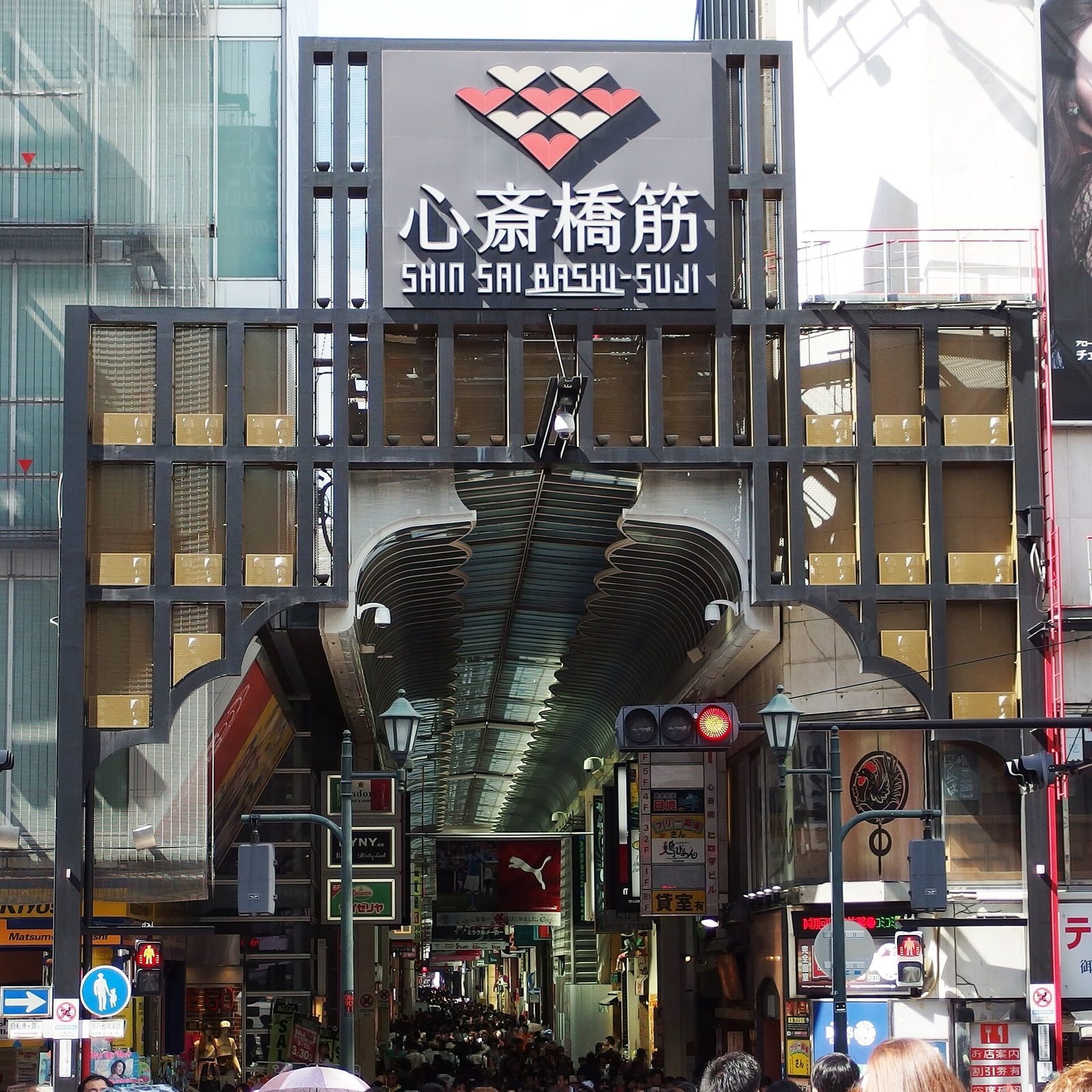 Shinsaibashi-sujiFree · covered, and open late
Sight photographs by 663highland, Clemens Vasters, DXR, Dick Thomas Johnson, Immanuelle, Jakub Hałun, KENPEI, MASA, Martin Falbisoner, Mc681, Naokijp, Oilstreet, Tokumeigakarinoaoshima, そらみみ, 掬茶, via Wikimedia Commons, under CC BY, CC BY-SA, CC0 and public-domain licences. Each sight’s own page carries its full credit and licence.
All sixteen, with what each ticket covers and when the crowd arrives →
.jpg)
Plans by how long you have
Written plans rather than lists, each built around what is shut on the day you are here. The longer ones add Kyoto, Nara and Himeji — all of them closer than most visitors expect.

Osaka is routinely described as “a city with nothing to see”, usually by people comparing it with Kyoto. The defensible version: Osaka has few must-see monuments and an enormous amount to do. Its castle is a reconstruction, its temples are rebuilds, and its best hours are spent in markets, arcades and counters rather than in front of anything. Judge it as a place to spend a day, not a place to photograph, and the reputation inverts.
Everything on this page is checked against a primary source and dated. Fares and opening hours change — confirm before you travel.