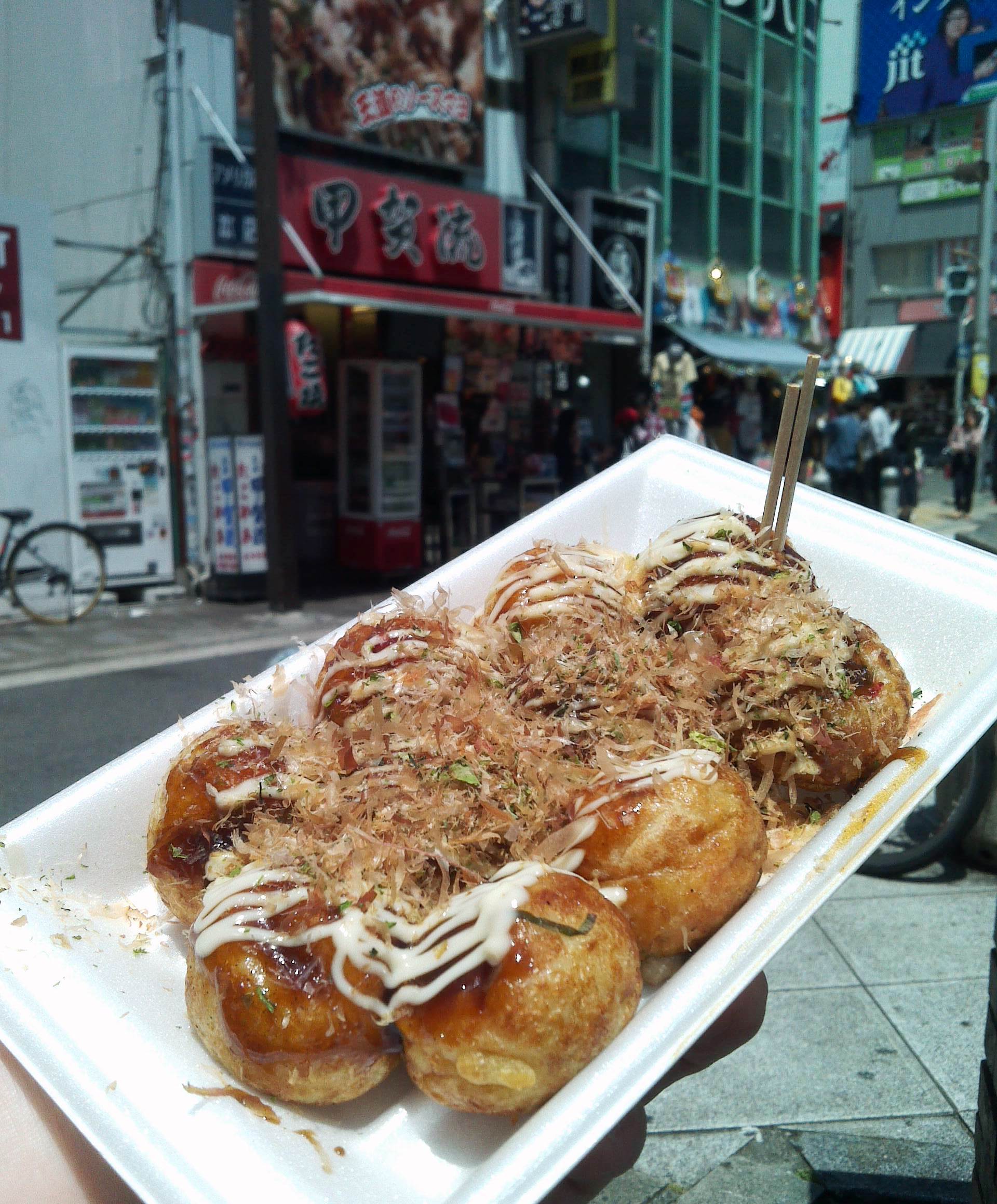
Ordering at a kushikatsu counter works in small rounds, not one big order: you ask for two or three skewers at a time, eat them, then order more, and staff work out what you owe by counting the empty skewer sticks left on your plate rather than writing anything down. You end the meal by telling staff you’re finished, and the bill is tallied from what’s in front of you.
The basic shape of the meal
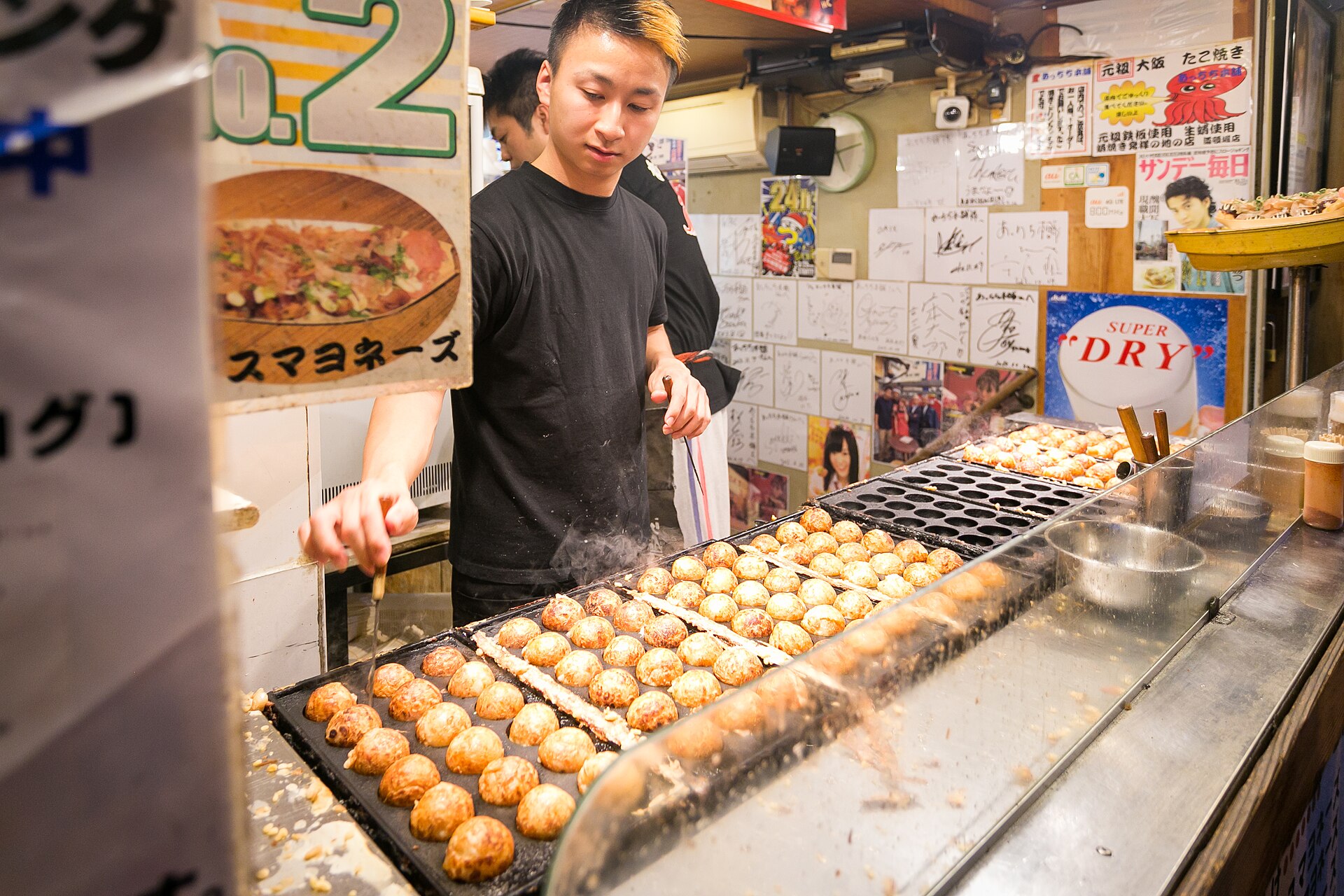
Kushikatsu (串カツ) is deep-fried, skewered food — meat, seafood, vegetables — coated in a light batter and breadcrumbs, fried to order, and eaten standing or seated at a counter facing the fryer. It developed in Osaka’s Shinsekai and Nishinari districts as a fast, cheap way to eat next to manual labour and market work, and the format still assumes a quick turnover rather than a long sit-down meal. That history is part of why the ordering system looks nothing like a restaurant with a printed bill.
There is no single “correct” kushikatsu chain — shops range from standing bars to seated counters to larger multi-floor restaurants, and each sets its own menu, skewer prices, and house rules on the sauce. What’s consistent across nearly all of them, and what this article focuses on, is the ordering rhythm itself.
Step by step: how an order actually flows
- You order a small round, not the whole meal. A first order is typically two or three skewers, chosen either by pointing at a menu board, reading a paper checklist, or telling staff directly. Ordering everything you might want in one go is unusual and can produce food faster than it can be eaten hot.
- The skewers arrive fried to order. Because each skewer is fried on demand, a small round comes out within a few minutes; a large one takes longer and arrives less evenly hot, which is the practical reason shops steer new customers toward ordering little and often.
- You eat, then order again. Once a round is finished, you place a second order the same way. This repeats for as many rounds as you want. There is no expectation you commit to a total in advance.
- The tab is tracked by the empty sticks on your plate, not on paper. This is the detail that surprises most first-time visitors. Rather than a running written order or a check placed on the table, staff count the number of used skewer sticks left in front of you at the end of the meal and calculate the bill from that count. Some shops collect the used sticks as you go and count them behind the counter instead; either way, the stick is the unit of account, not a ticket or receipt.
- You signal that you’re done. There’s no call button or automatic close-out — you tell staff you have finished ordering, commonly with a direct phrase such as “these are all” or simply asking for the bill (kaikei, 会計). Staff then count the sticks in front of you (or already collected) and tell you the total.
- Payment is usually settled at the counter, in cash. Many smaller kushikatsu counters, particularly in Shinsekai, are cash-based rather than card-based, which is a broader pattern across small Osaka food businesses covered in this site’s guide to why Osaka is so cash-reliant.
The consequence for a visitor is practical rather than cultural: don’t discard your own skewer sticks, don’t let a server clear your plate mid-meal if you plan to order more, and don’t assume a printed check exists — the stick count on your plate is the check.

The one rule every guide already tells you — and why it exists
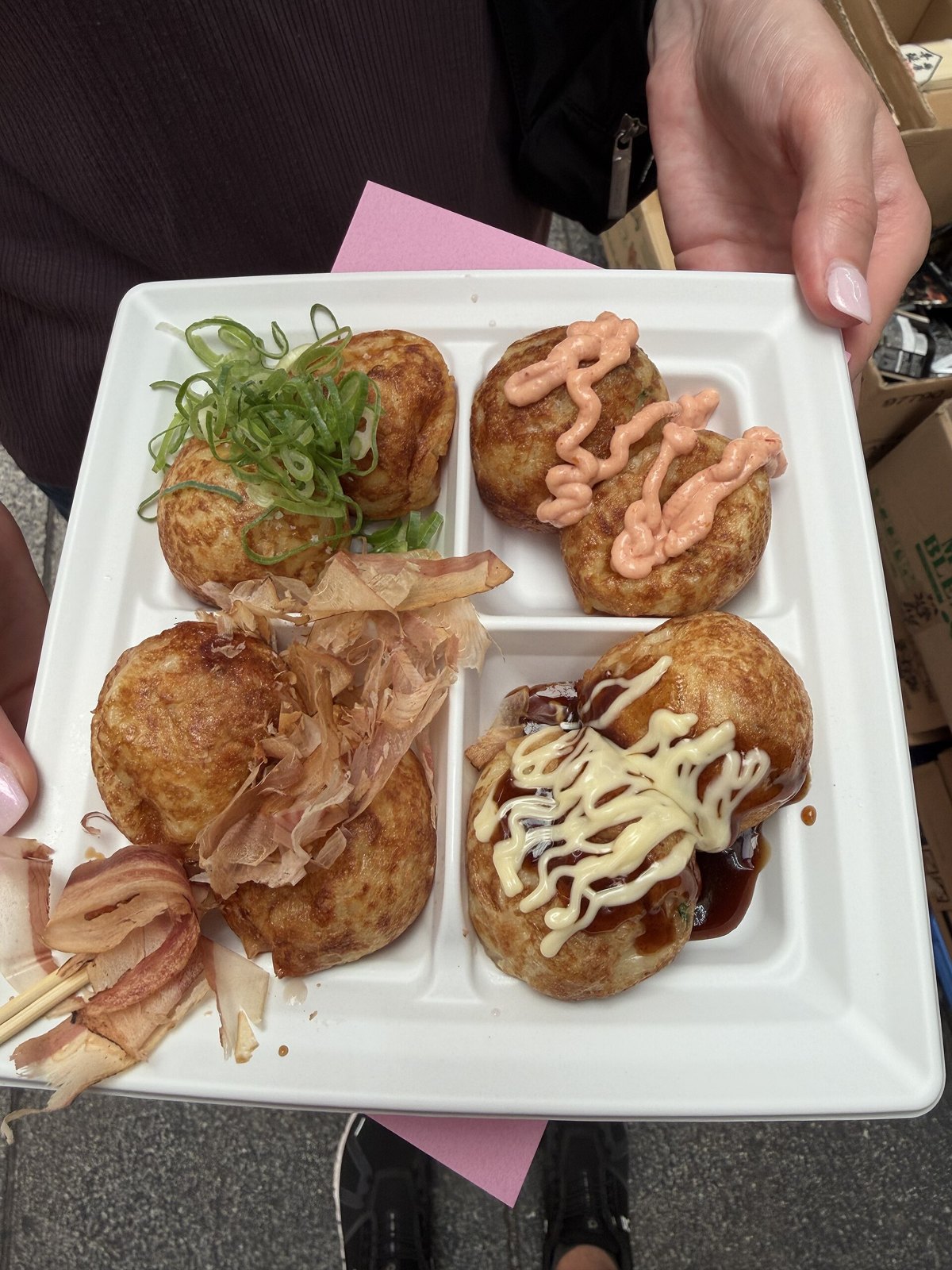
The rule repeated everywhere is real: kushikatsu is served with a shared container of dipping sauce at the counter, and the convention is to dip once, before the first bite, and not dip a skewer that’s already been bitten back into the communal sauce. Because the sauce is shared by everyone at the counter, re-dipping a partially eaten skewer means other diners’ food touches whatever has already been in your mouth. Many shops post a sign to this effect, and shredded cabbage is typically provided free at the counter specifically so a diner can spoon a small amount of sauce onto the cabbage and use that to add extra sauce to a skewer without dipping it back in. Where a shop’s own house rules differ from this description, follow what’s posted — individual shops set their own conventions.
.jpg)
What actually varies between skewers
Menus are organised by category rather than a flat list, and this affects both flavour and how a round is best assembled:
| Category | What it typically includes | What varies |
|---|---|---|
| Meat | Pork, beef, chicken, often with cheese or scallion variants | Cut and marbling; some are seasonal or shop specials |
| Seafood | Prawn, squid, scallop, small whole fish | Availability shifts with season and catch |
| Vegetable | Lotus root, quail egg, mushroom, asparagus, onion | Usually the cheapest category and a common way to fill out a round |
Because skewers are ordered in small rounds rather than all at once, mixing categories within a round — one meat, one vegetable, one seafood — is a common way diners pace the meal and taste a spread rather than committing early to one type.
Where this format is concentrated in Osaka
Shinsekai, the district around Tsutenkaku tower in Naniwa Ward, is the part of the city most associated with kushikatsu, reflecting the area’s origin as a working-class entertainment and eating district built up in the early twentieth century. Kushikatsu counters also operate through Dotonbori and Namba in Minami, Osaka’s dining and nightlife centre, as distinct from Kita (Umeda), the business and transport hub to the north — a distinction this site sets out more fully in its guide to Osaka’s districts. The Osaka Convention & Tourism Bureau’s own visitor information describes Shinsekai and kushikatsu as historically linked, which is a useful starting point for readers deciding where to go rather than which shop to choose.
Japan’s national tourism body, the Japan National Tourism Organization, also documents kushikatsu as a distinct regional dish associated with Osaka in its published food guides, for readers who want a source independent of any single shop or district.
.jpg)
Getting there and paying for it
Shinsekai and Dotonbori are both reachable by Osaka’s subway and by JR, but which line serves which station depends on the operator — Osaka runs four separate private railways (Hankyu, Hanshin, Kintetsu, Nankai) alongside JR and the Osaka Metro subway, and none of their tickets automatically cover another company’s trains. The mechanics of that system, including where transfers cost more than expected, are set out in this site’s guide to Osaka’s railway companies and transfer traps. An ICOCA card works across nearly all of these operators for a single fare tap-in and tap-out, though it does not function like a flat-rate day pass; how it actually behaves is explained in the guide to using an ICOCA card in Osaka. Broader questions about moving around the city sit in the Getting Around archive.
As with much small-scale Osaka dining, expect cash to be the more reliable option at a standing kushikatsu counter even if card payment is sometimes available — a pattern covered in more depth in the site’s Planning & Practicalities archive.
What this site is and isn’t
Access Osaka is an independent, editorially written guide; details on how the site is researched, checked and funded are on the About page, and what the site collects from a reader is set out in the privacy policy. This article describes a general ordering pattern documented across published sources on kushikatsu and Osaka dining culture; individual shops set their own house rules, and a reader should follow whatever a specific counter posts or tells them directly.
.jpg)
Access Osaka is an independent guide written from published, checkable sources. We have not visited the places described here and we do not publish personal recommendations or invented ‘local favorites’ — where something is singled out as notable, we say who says so. Opening times, fares, closures and prices change at short notice, so treat everything here as a starting point and confirm with the museum, operator or venue directly before building a day around it. We give no advice on visas, insurance, health or safety; use your own government’s official guidance for those.
Featured image: Photo by Thankei, source, CC BY-SA 4.0
