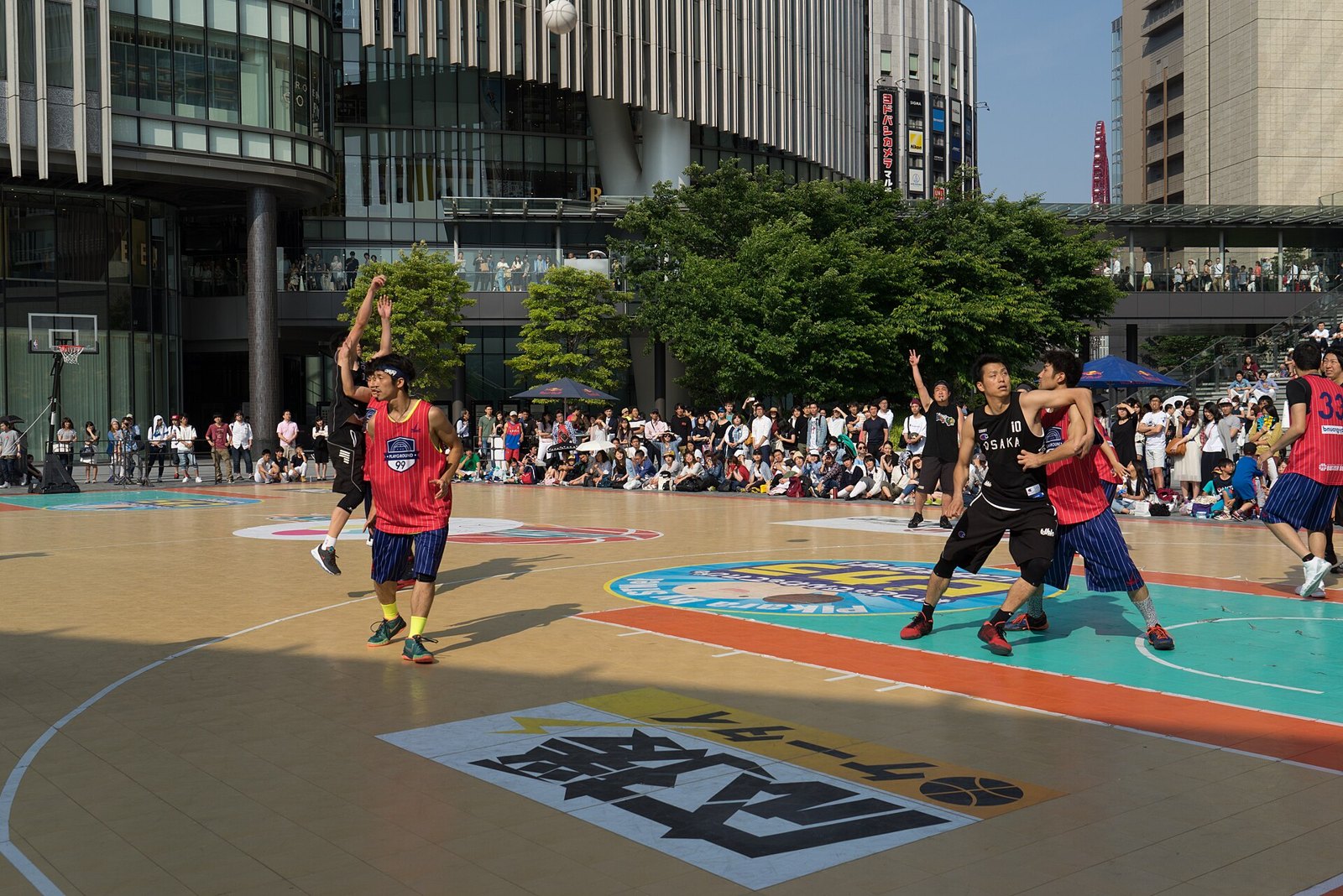
Stay in Minami if you arrive via Kansai Airport’s Nankai line, plan a Nara day trip, or want late-night bars within walking distance. Stay in Kita if your trip centers on JR services to Kyoto or a business-district hotel near Osaka Station. The choice follows your transfers and curfew, not a feeling.
What Kita and Minami actually are
Osaka does not have one downtown. It has two, and they sit about three kilometers apart with a river and a long stretch of office blocks between them.
Kita means “north.” On the ground it is Umeda: Osaka Station, the Hankyu and Hanshin terminals, department stores, and the elevated walkways linking them. It is where companies have their offices and where business hotels cluster.
Minami means “south.” It covers Namba, Shinsaibashi, and Dotonbori: the canal-side strip of signage that appears in almost every photograph of the city, plus the covered shopping arcades running north from it. This is where people go to eat and drink, not to work.
Both sides are well connected to the subway and to each other. The question is not which is “better.” It is which one removes a transfer from your itinerary, and which one keeps you closer to a bar after the last train has gone.
The decision that matters more than “vibe”
Most articles stop at the business-district-versus-nightlife-district summary and tell you to pick by instinct. That ignores how the two neighborhoods sit relative to specific train lines. Four things decide this for most visitors: how you arrive from Kansai Airport, which cities you plan to day-trip to, how late you intend to stay out, and how much that saved transfer is worth over a multi-night stay.
| Factor | Favors Kita (Umeda) | Favors Minami (Namba/Dotonbori) |
|---|---|---|
| Arrival via Nankai Rapi:t from Kansai Airport | Requires a further transfer from Namba | Rapi:t terminates here directly |
| Day trip to Kyoto | JR Kyoto Line departs from Osaka Station | Requires travel to Kita first |
| Day trip to Nara | Requires travel to Namba first | Kintetsu Nara Line departs from Osaka Namba Station |
| Bars and izakaya past midnight | Venues more spread out; often a taxi after last trains | Dense, walkable area; many places within a few minutes on foot |
| Hotel type | Business hotels, department-store towers | Mix of business and leisure hotels near shopping streets |
Kansai Airport: the Rapi:t ends in Namba
Nankai Electric Railway runs the Rapi:t limited express from Kansai Airport straight into Namba Station. There is no transfer. If your hotel is in Minami, you can walk or take one short subway hop from the platform to your room.
Staying in Kita instead means getting off at Namba and adding a subway ride to Umeda, bag in hand, after a long flight. That is not a disaster. It is one extra change of train, and it is worth knowing about before you book. Nankai’s own site sets out the Rapi:t route and current fares — check it directly rather than relying on a number printed here, since Nankai Electric Railway is the operator and the only reliable source for what it currently charges.
JR also runs an airport service, the Haruka, which calls at Shin-Osaka and Osaka Station rather than Namba — useful if Kita is your base. The full set of airport options, including which card works on which line, is covered in our guide to Kansai Airport transport and fares.

Day trips split the other way
Kyoto and Nara pull you in opposite directions, and so does your choice of base.
JR West runs direct services to Kyoto from Osaka Station in Kita — no change of station needed if that is your base. JR West publishes current timetables and fares on its own site, and that is where to confirm journey times rather than from a guidebook.
Nara works the other way. Kintetsu Railway’s Nara Line departs from Osaka Namba Station, in Minami, and runs direct to Kintetsu-Nara. Staying in Kita means crossing the city to Namba before you’ve even left for Nara. Staying in Minami, it’s a direct line from near your hotel.
If your itinerary includes both cities, you are going to make this crossing at least once regardless. The point is to minimize how often — and that depends on which day trip you take more frequently, not which district photographs better. For the wider picture of who runs what, see our guide to Osaka’s railway companies and transfer traps.

Last trains and the midnight curfew
Osaka’s subway and most private lines stop running somewhere between roughly midnight and half past — the exact cut-off varies by line and direction, and Osaka Metro publishes the current last-train times for each line on its own site. That window is what actually separates Kita and Minami after dark.
Minami’s drinking and eating streets — Dotonbori, Shinsaibashi, the arcades around them — sit close together. If you miss the last train, you can often still walk back to a hotel in the area. Kita’s equivalent streets, around Kitashinchi and the areas north of Osaka Station, are more spread out, and many close earlier in any case. Miss the last train there and a taxi is the realistic option.
This matters more than it sounds. An ICOCA card works across nearly all of these lines, but it cannot make a line run later than its last scheduled train. If izakaya-hopping past midnight is part of the plan, Minami removes a failure point that Kita doesn’t. The ICOCA card guide covers what the card does and doesn’t solve.
What each side is actually built for
Kita is Osaka’s commercial and transport spine. Department stores, office towers, and the stations of four separate operators — JR, Hankyu, Hanshin, and the subway — converge within a few minutes’ walk of each other. It suits a traveler whose priority is a short, predictable commute to trains out of the city, including the Shinkansen from Shin-Osaka, which is a separate station from Osaka Station and reached by its own subway or JR connection.
Minami is built around eating, drinking, and shopping. Dotonbori’s canal-side signage and the Shinsaibashi arcade sit at its center, with Kuromon Ichiba market a short walk further south. It suits a traveler whose days are organized around food more than meetings. Our Food & Drink archive and Shopping & Markets archive cover specific venues in both areas.
Neither side is a transport dead-end. Both connect to the subway and to each other in well under fifteen minutes. The difference is what sits immediately outside your hotel door after that last connection.
A practical way to decide
List your fixed points before booking: the day you arrive and which airport line you’ll use, which day trips you’ve actually committed to, and how late you expect to be out on a typical night. Put those three against the table above. Most itineraries will tip clearly one way once the transfers are counted rather than guessed at.
If your stay is cash-heavy — many izakaya and small bars in both districts still don’t take cards — our guide to Osaka’s cash-based economy is worth reading before the first night out, wherever you land. And for wider transport planning across the stay, the Getting Around archive and Planning & Practicalities archive cover the rest of it.
Access Osaka is an independent guide written from published, checkable sources. We have not visited the places described here and we do not publish personal recommendations or invented ‘local favorites’ — where something is singled out as notable, we say who says so. Opening times, fares, closures and prices change at short notice, so treat everything here as a starting point and confirm with the museum, operator or venue directly before building a day around it. We give no advice on visas, insurance, health or safety; use your own government’s official guidance for those.
Featured image: Photo by Dime Gontar, source, CC BY 2.0
