
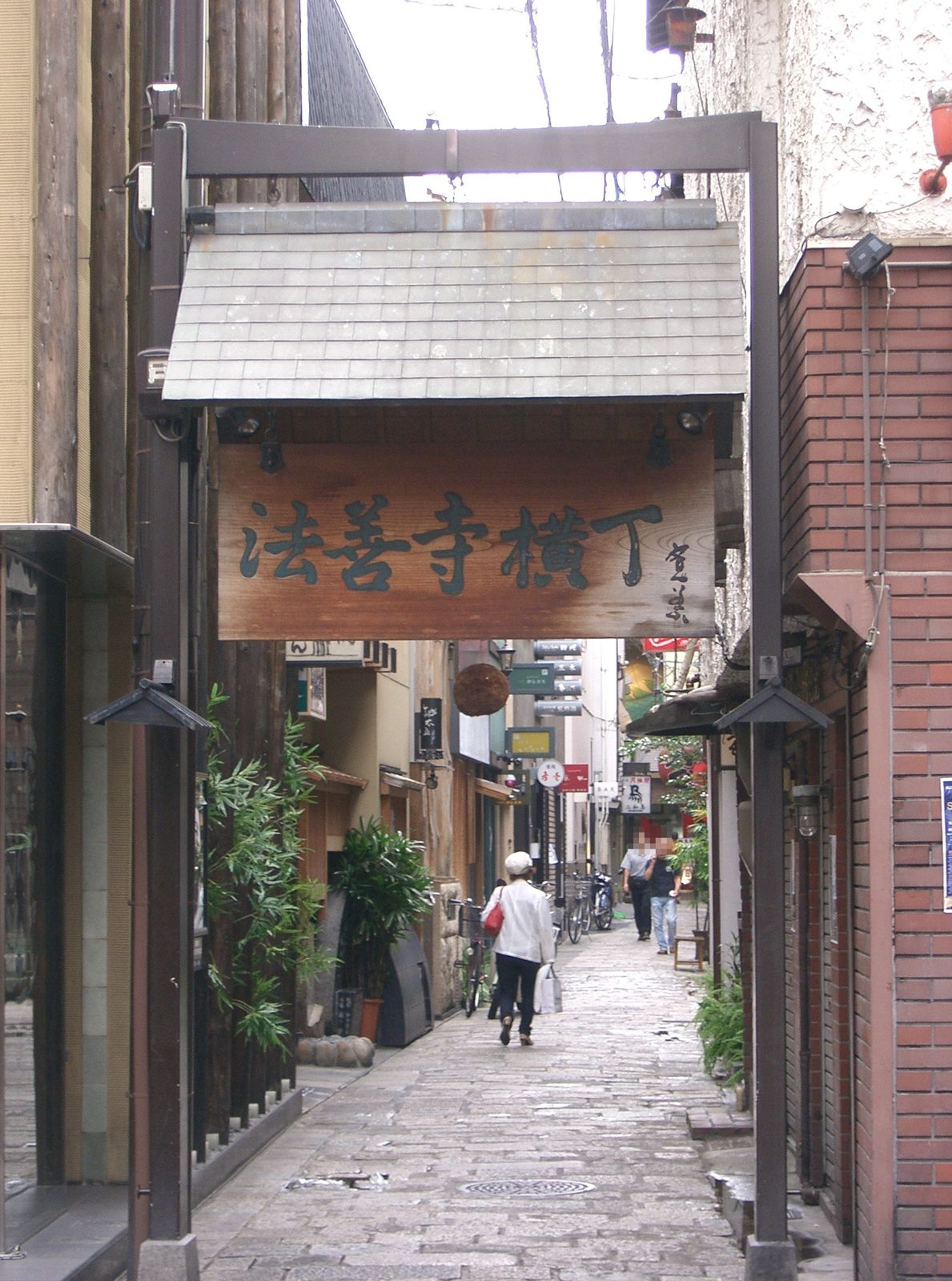
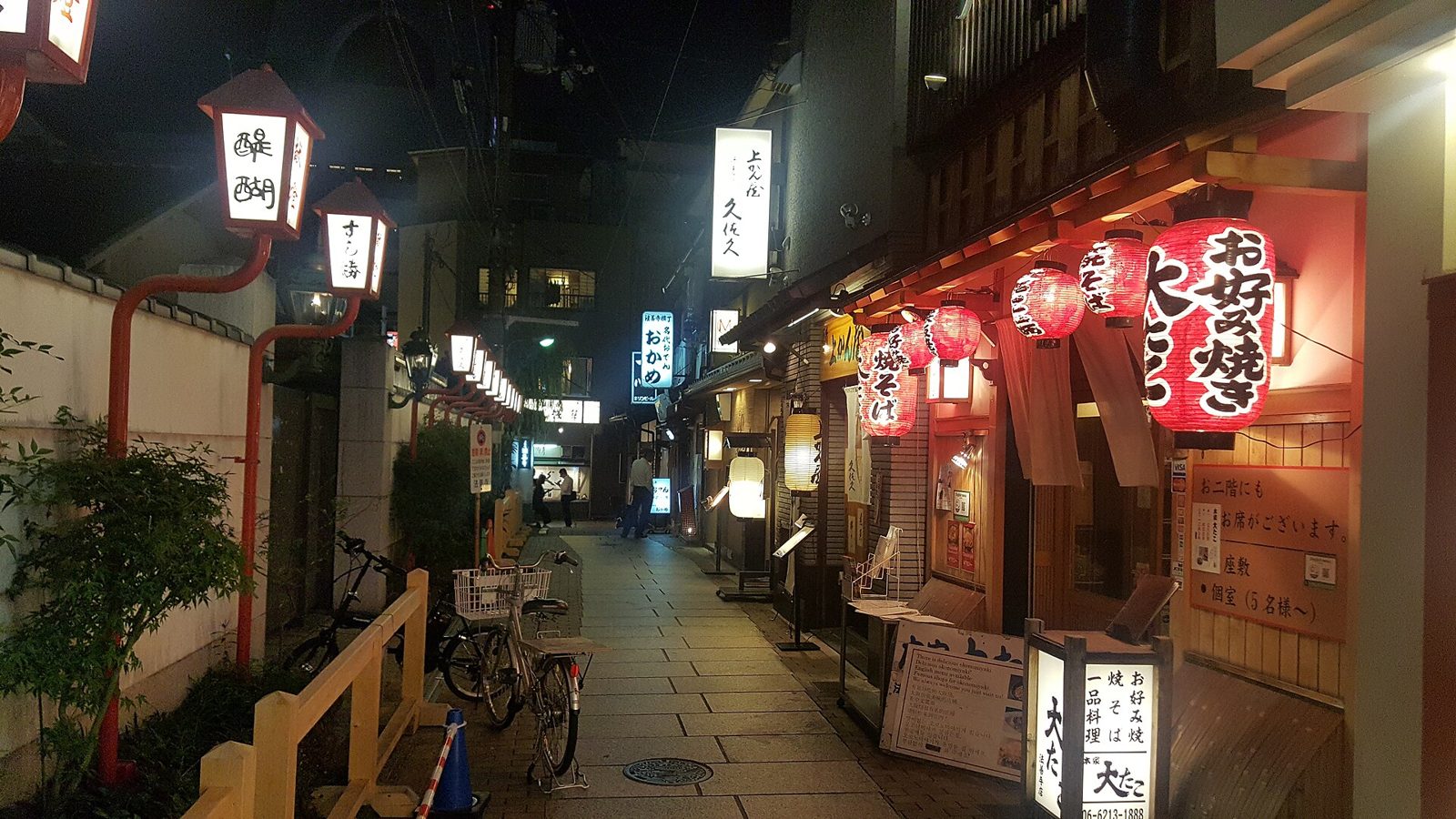
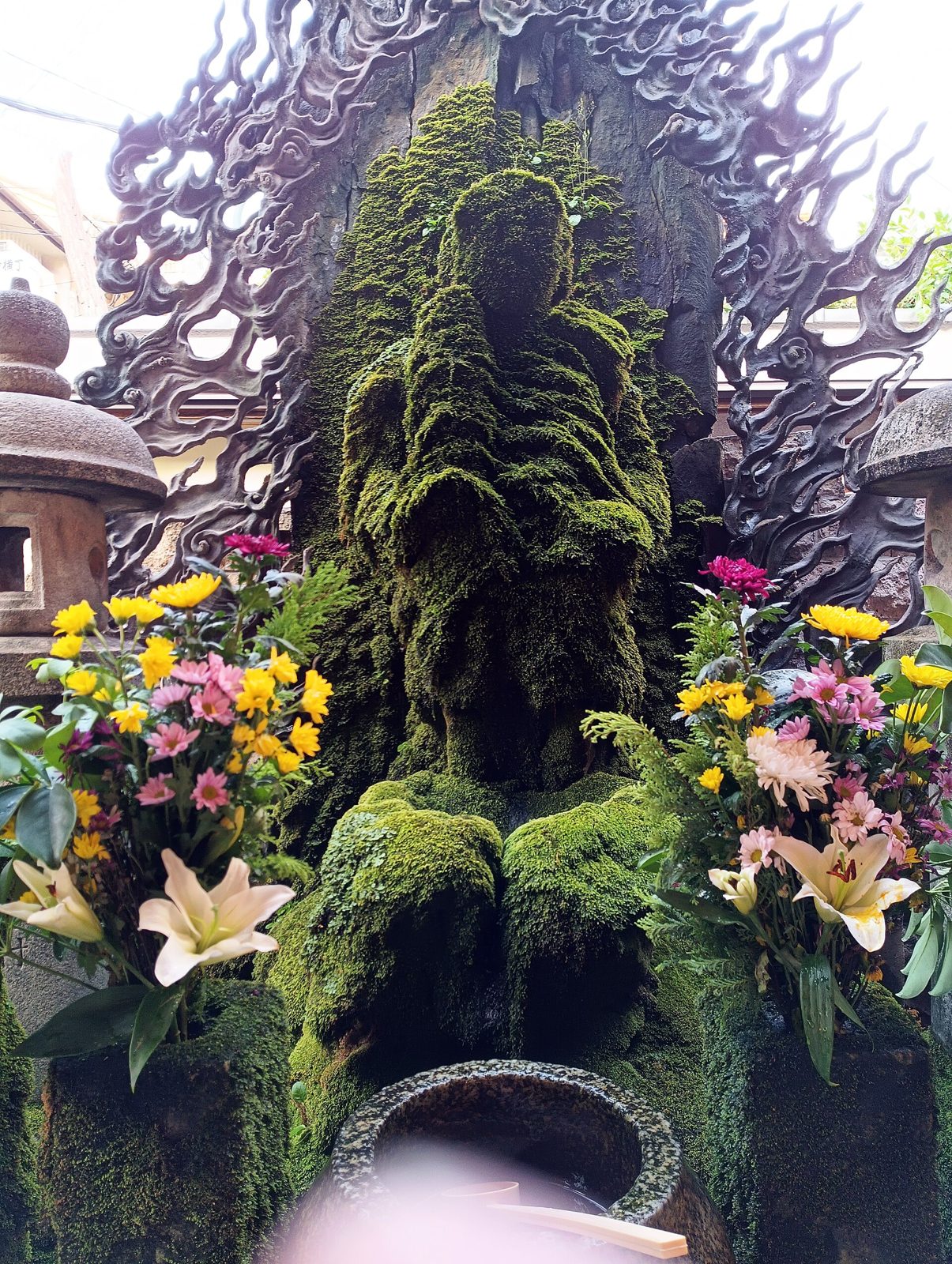
Two narrow stone-paved lanes immediately behind Dotonbori, lit by lanterns, holding a small temple with a moss-covered statue that visitors pour water over. Free, and the best two minutes’ walk in Osaka.
What it costs
Free. The lanes and the temple cost nothing. The restaurants along them are small, old and not cheap, and several are the kind of place that expects a reservation.
The restaurants along the lanes are old, small and mostly counters. Several are the sort of place that takes reservations and does not welcome walk-ins; a few are long-standing and expensive. Looking is free, and looking is most of the point.
When to go
After dark, when the lanterns are lit and the contrast with Dotonbori one street away is at its sharpest. It is a completely different city for about eighty metres.
It survived the wartime bombing that flattened most of the surrounding blocks, which is why the scale here is pre-war and everything around it is not.

Getting there
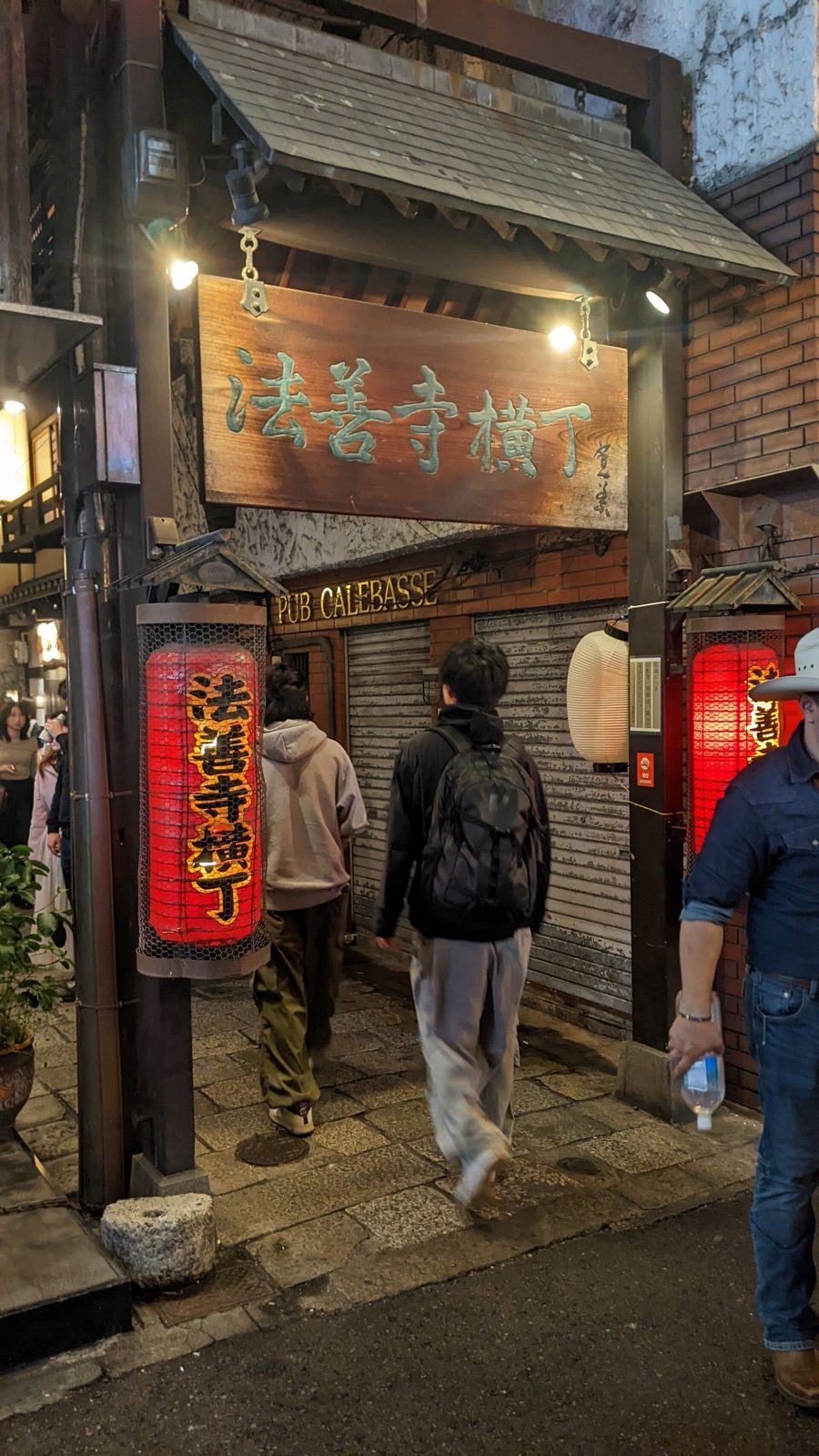
It runs parallel to and just south of Dotonbori. Most people walk past the entrance without noticing it; look for the stone paving.
The entrances are easy to miss from the main street — look for the stone paving and the lanterns rather than a sign. There are two parallel lanes, not one, and the second is quieter.

If you only have an hour
Walk both lanes, pour water on the statue, and go back out. It takes ten minutes and it is the single best correction to the impression Dotonbori gives.
The water-pouring is done with the ladle provided, over the statue rather than over your hands, and there is no queue etiquette to worry about — people simply take a turn.
What people get wrong
The moss on the Fudo statue is the point, not neglect. Visitors have ladled water over it for decades and the moss is the result — it is an act of worship, not a maintenance failure, and the statue is completely covered because of it.
_Temple_hdsr_S5_20.jpg)
Nearby
Ticketing arrangements and opening patterns as published and checked on 5 September 2026. These change without much warning — confirm with the place itself before you travel. More sights, and how they fit together, in Landmarks & Sights.