
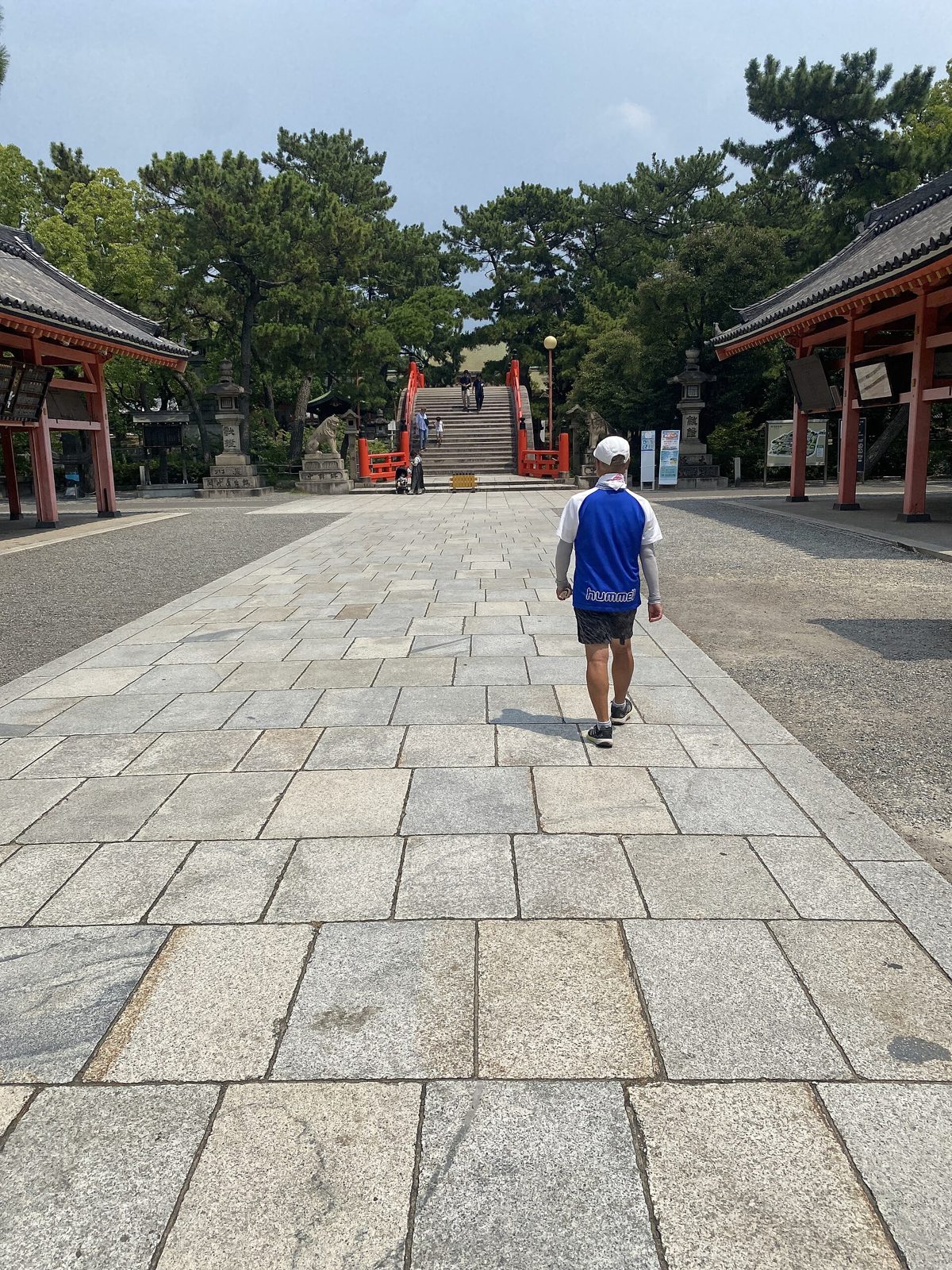
One of the oldest shrines in Japan, in an architectural style that predates Chinese influence entirely, reached across a steep vermilion arched bridge that is the reason most people come. Free.
What it costs
Free. The grounds, the bridge and the shrine halls cost nothing. There is no ticketed interior here in the way there is at a temple.
When to go
Early morning is best for photographs of the bridge without people on it. New Year brings one of the largest shrine crowds in Japan — several million visitors over three days — which is worth seeing and worth avoiding depending entirely on what you came for.
The shrine is also the head of a network of some two thousand Sumiyoshi shrines across Japan, which is why the grounds are larger and busier than the surrounding suburb would lead you to expect.

Getting there
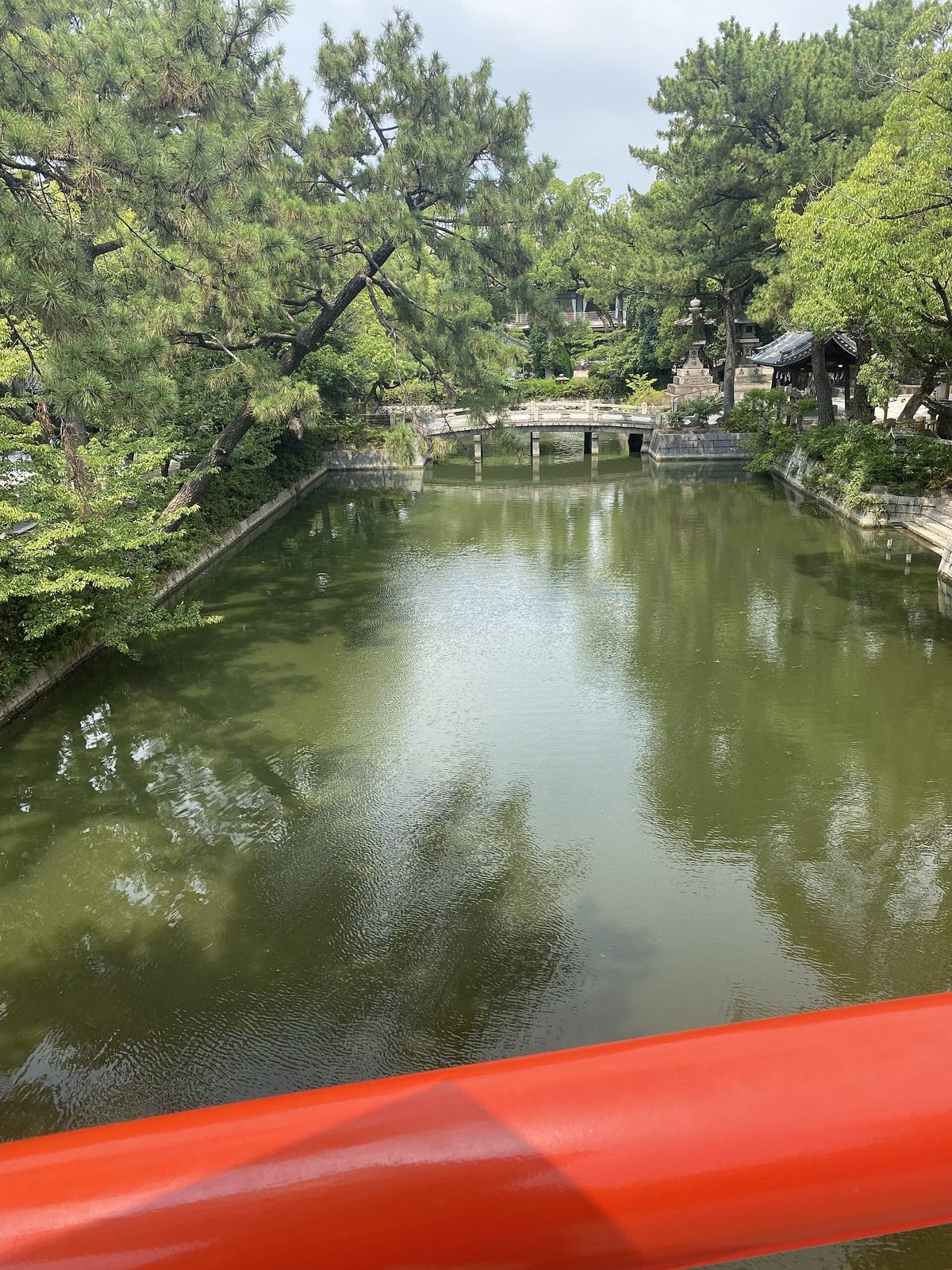
It is south of the centre, further out than most visitors expect, and the tram line that serves it is part of the appeal — the Hankai tram is the last of its kind in Osaka.
The Hankai tram that serves it is the last surviving tramway in Osaka, runs on street level for much of its route, and costs a flat fare. Taking it out and the subway back gives you two entirely different views of the southern city.

If you only have an hour
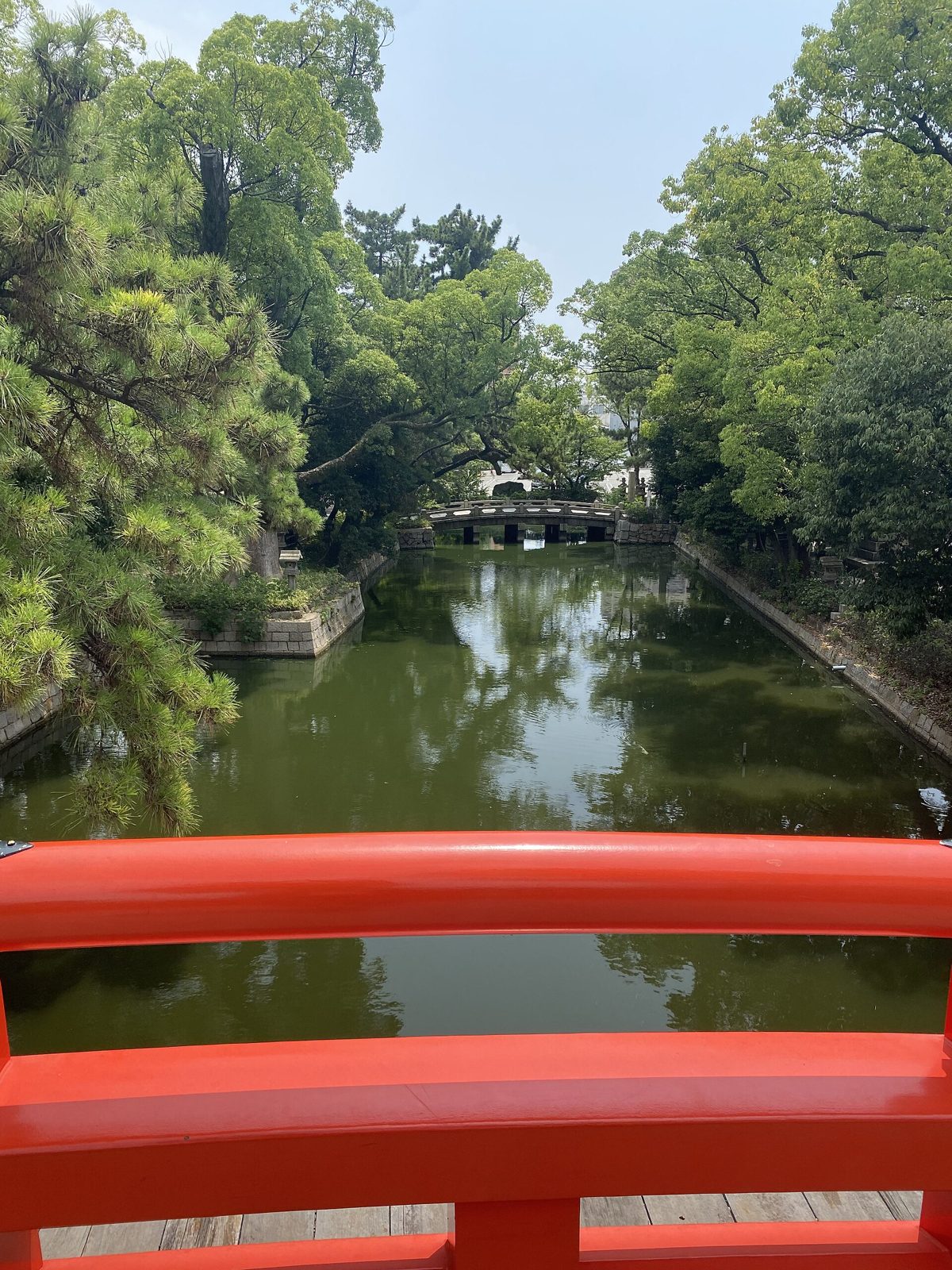
Cross the Sorihashi bridge, walk the line of four main halls, and come back. The bridge is steeper than it photographs and there are steps, not a ramp.
Take the tram at least one way. It is slower and it is the better half of the trip.
What people get wrong
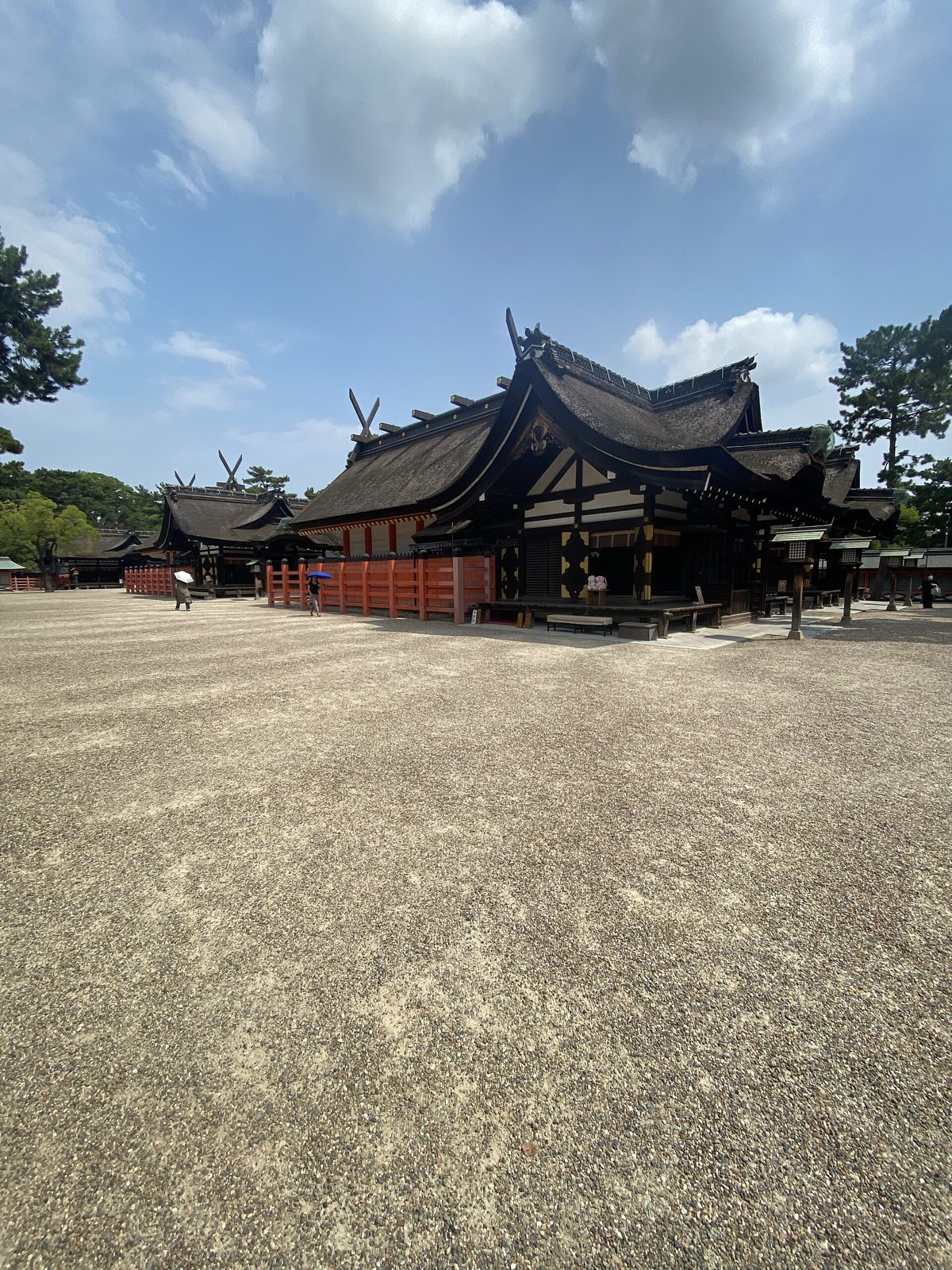
The architectural style is the point, and almost nobody notices it. Sumiyoshi-zukuri has straight roofs and no curve, no vermilion-and-gold ornamentation on the halls themselves, and it is deliberately preserved as a pre-Buddhist form. Visitors photograph the bridge and walk past the four halls that are the actual reason the shrine matters.

Nearby
Ticketing arrangements and opening patterns as published and checked on 5 September 2026. These change without much warning — confirm with the place itself before you travel. More sights, and how they fit together, in Landmarks & Sights.