.JPG)
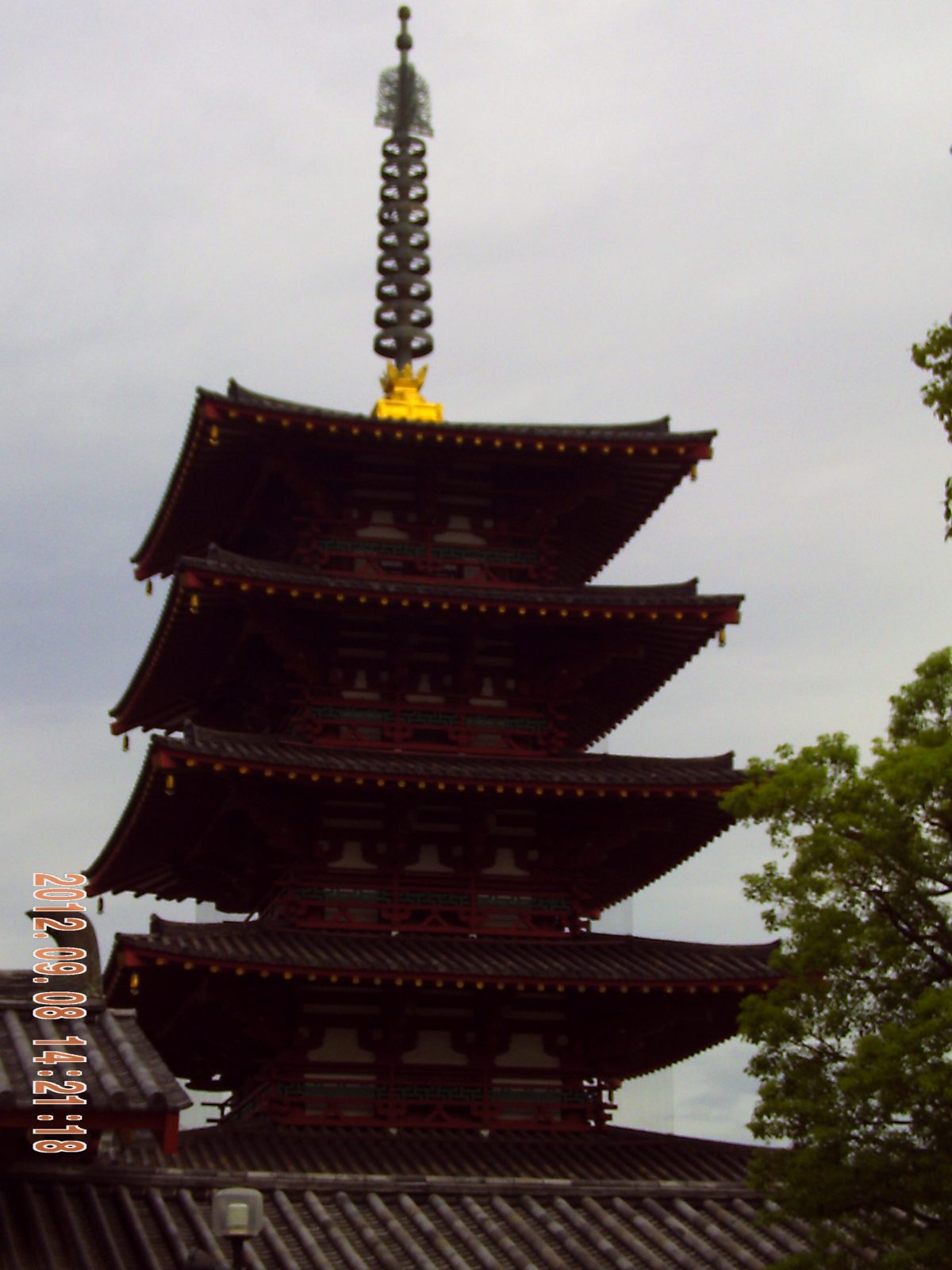
Founded in 593, and by most reckonings the oldest officially administered Buddhist temple in Japan. The grounds are free to walk; the central precinct with the pagoda is the part you pay for.
What it costs
The outer grounds cost nothing and you can walk through them freely. The central precinct — the pagoda and the Kondo main hall — is ticketed, and the treasure house and the garden are separate tickets again.
Tickets are sold separately at each gate rather than centrally, so it is worth deciding what you want to see before you walk in.
When to go
The twenty-first of each month brings a large flea market across the grounds, which is the best day to come and the busiest. Otherwise mornings are quiet; this is a working temple and it feels like one before the coaches arrive.
Bon Odori in August fills the grounds, and the temple’s role in the city’s calendar is worth knowing about: this is not primarily a visitor attraction, and on festival days it is emphatically not.
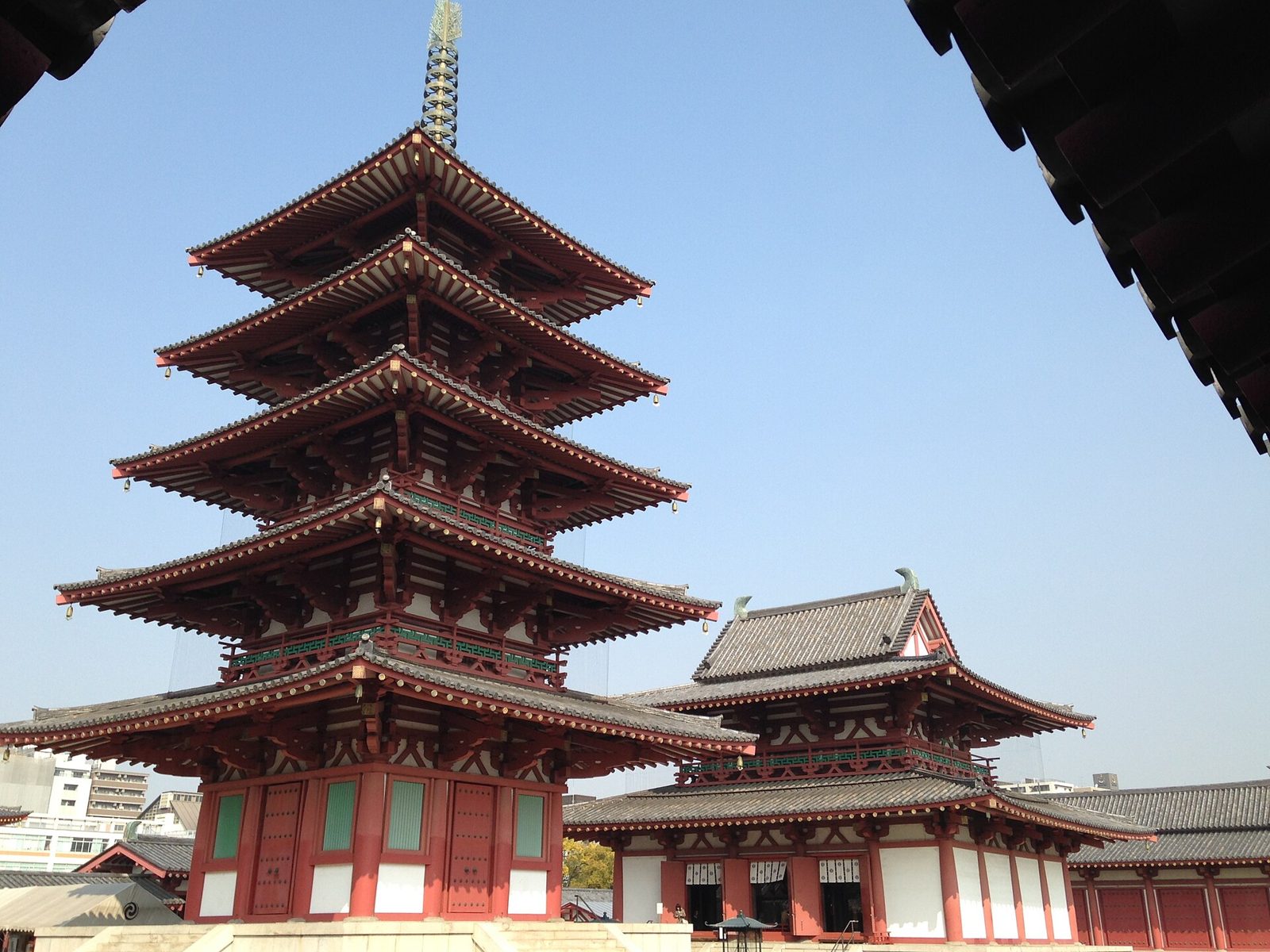

Getting there
It is a short walk from Tennoji, which makes it easy to combine with Abeno Harukas and Shinsekai in one afternoon.
The temple’s own garden, behind the main precinct, is quiet almost all the time and is ticketed separately. It is the part of the site most visitors never see.

If you only have an hour
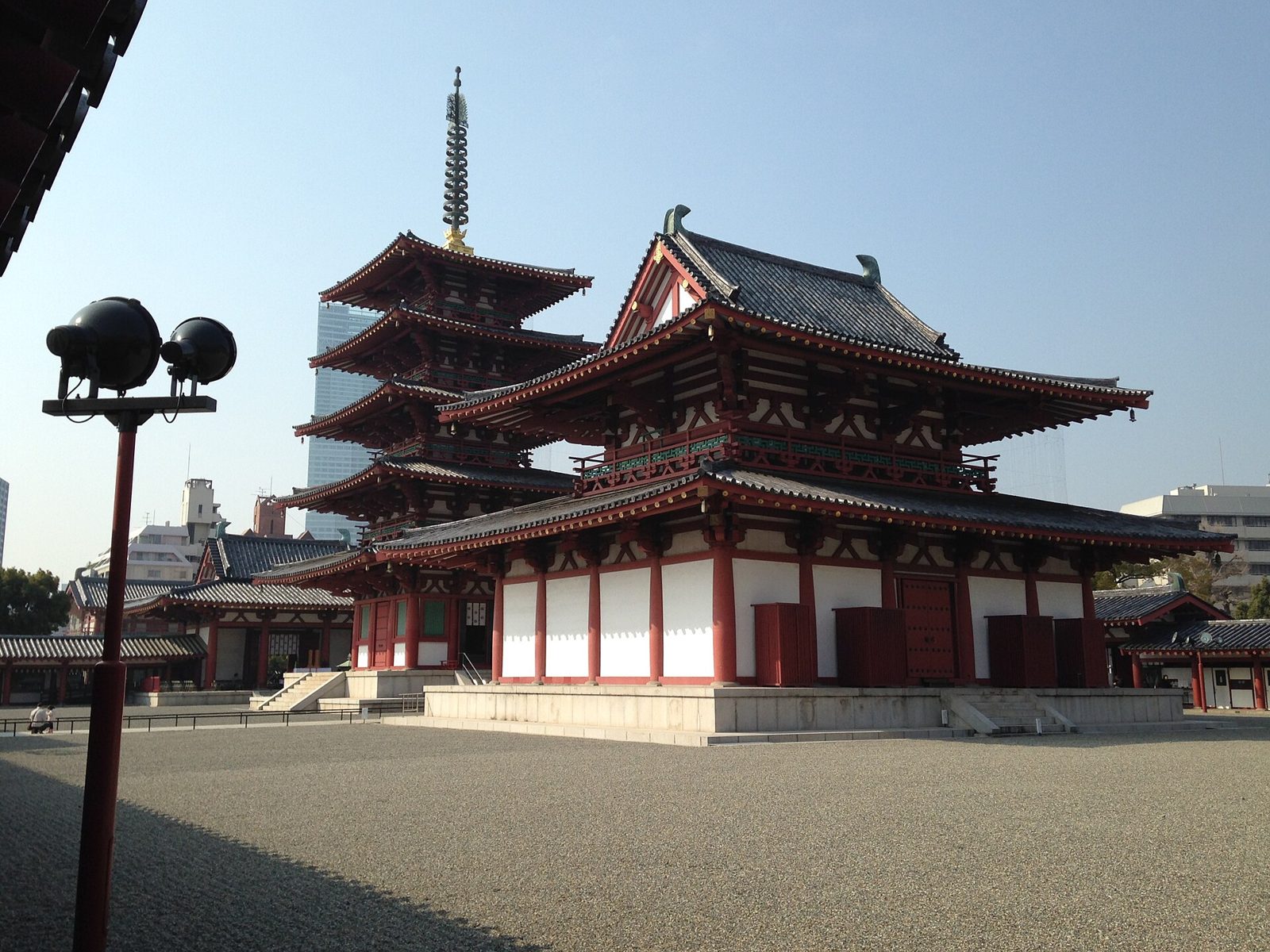
Walk in through the outer gate, round the outside of the central precinct, and out. You will see the pagoda over the wall for nothing. Pay only if you want to stand inside the cloister, which is the point of the place if you have the time.
What people get wrong
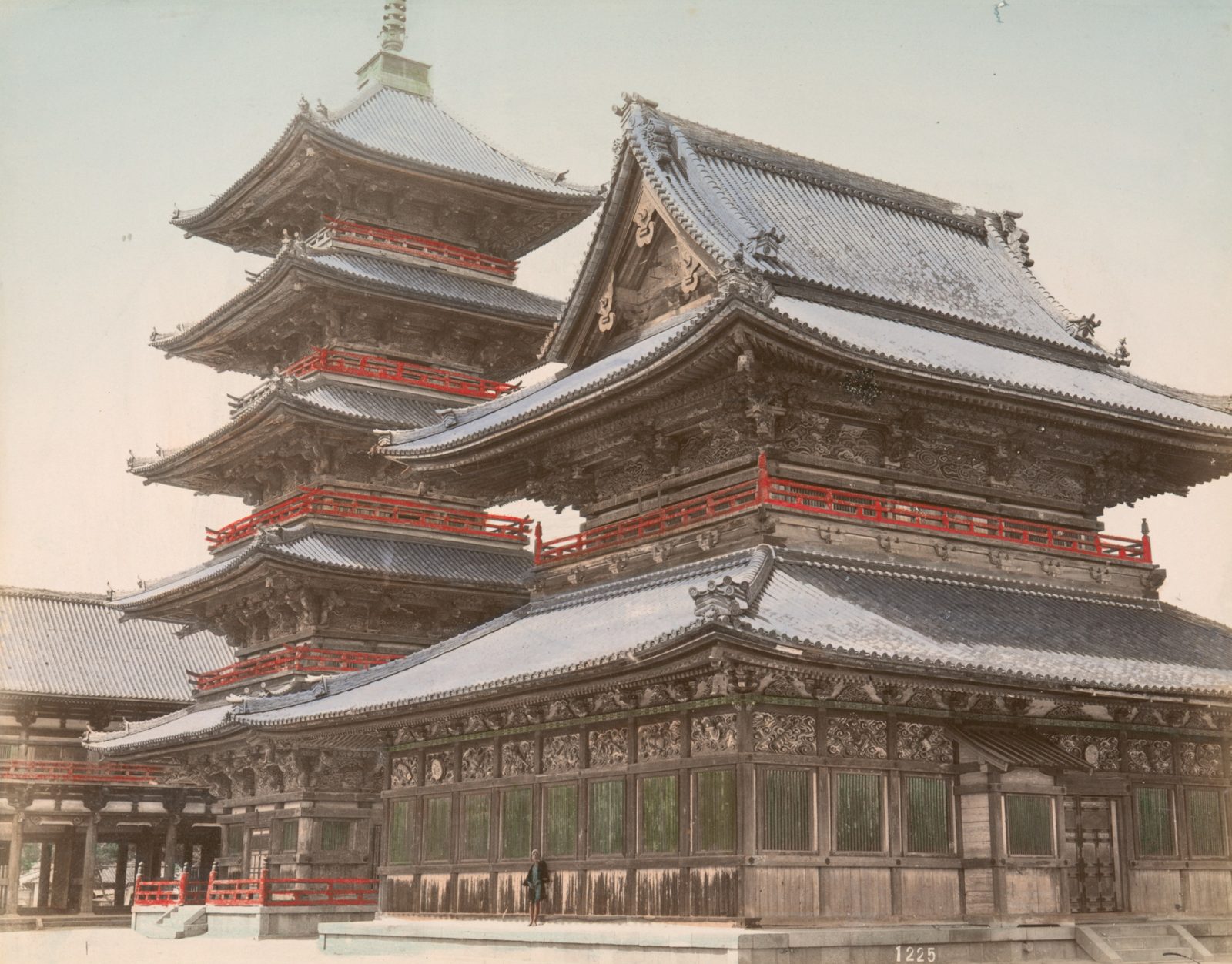
Nothing you are looking at is from 593. The temple has burned down and been rebuilt repeatedly; the current pagoda and main hall are post-war reconstructions in concrete, rebuilt to the original layout. The layout is the ancient thing here — a straight line of gate, pagoda and hall that is one of the oldest temple plans in the country — not the fabric.

Nearby
Ticketing arrangements and opening patterns as published and checked on 5 September 2026. These change without much warning — confirm with the place itself before you travel. More sights, and how they fit together, in Landmarks & Sights.