
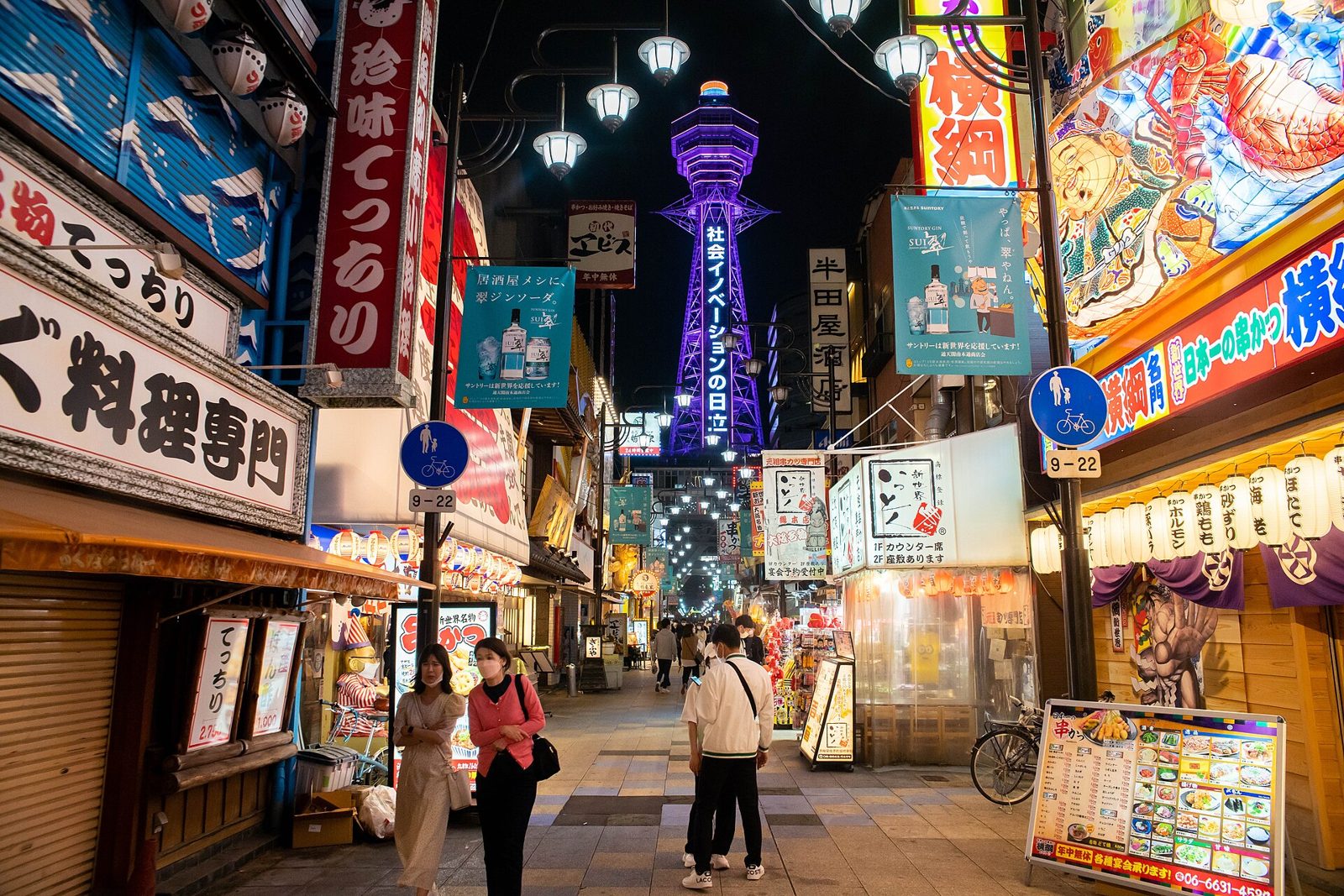
A district built in 1912 in imitation of Paris and Coney Island, left behind for most of a century, and now the most concentrated stretch of kushikatsu restaurants and hand-painted signage in Osaka. The streets are free; the tower in the middle is not.
What it costs
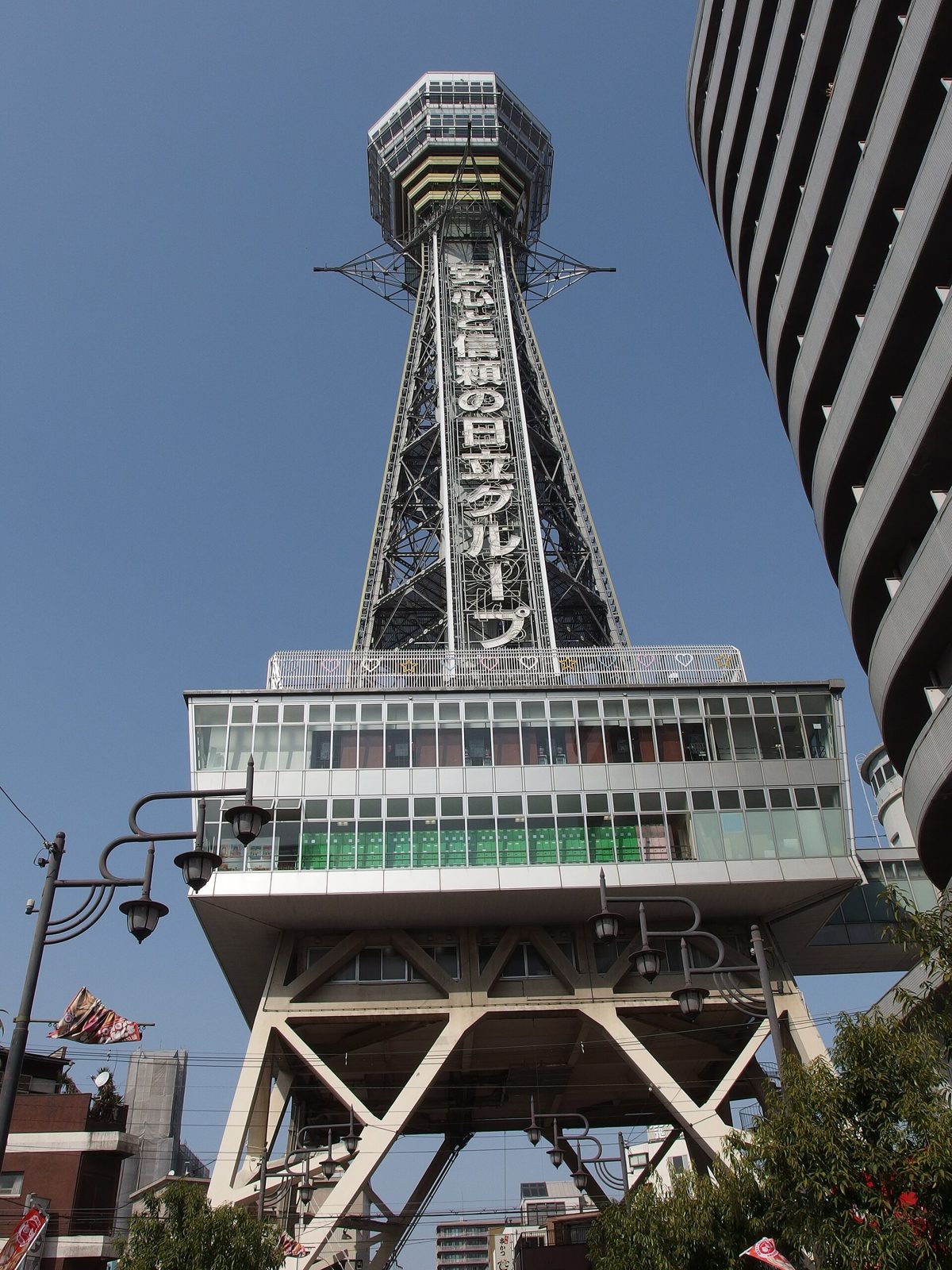
Walking Shinsekai costs nothing, and the streets are the point. The Tsutenkaku tower charges admission for its observation deck, with a further charge for the slide that runs down the outside of it.
Kushikatsu here is cheap by the skewer, which is how the bill gets away from people — see Food & Drink for how ordering actually works.
When to go
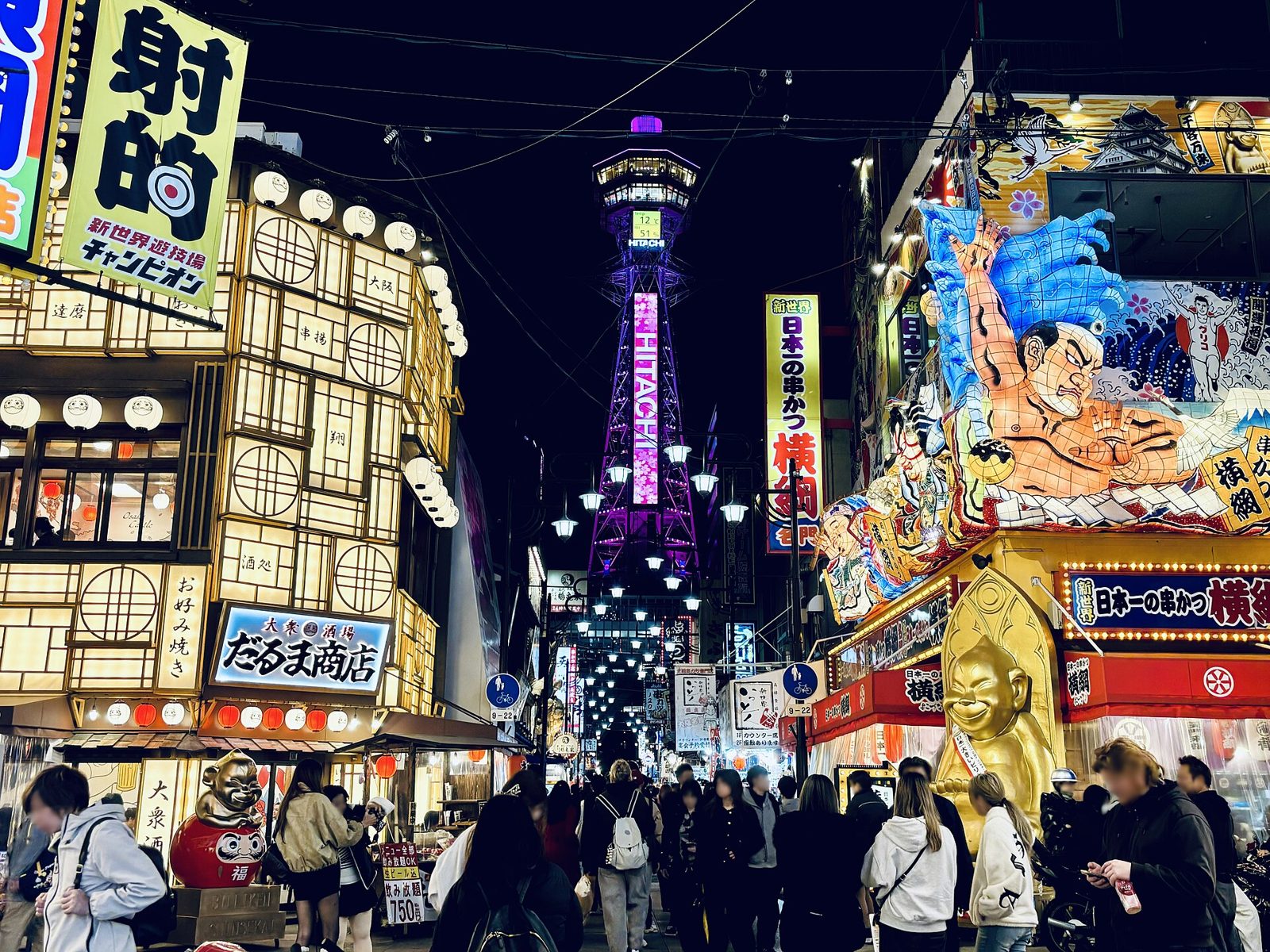
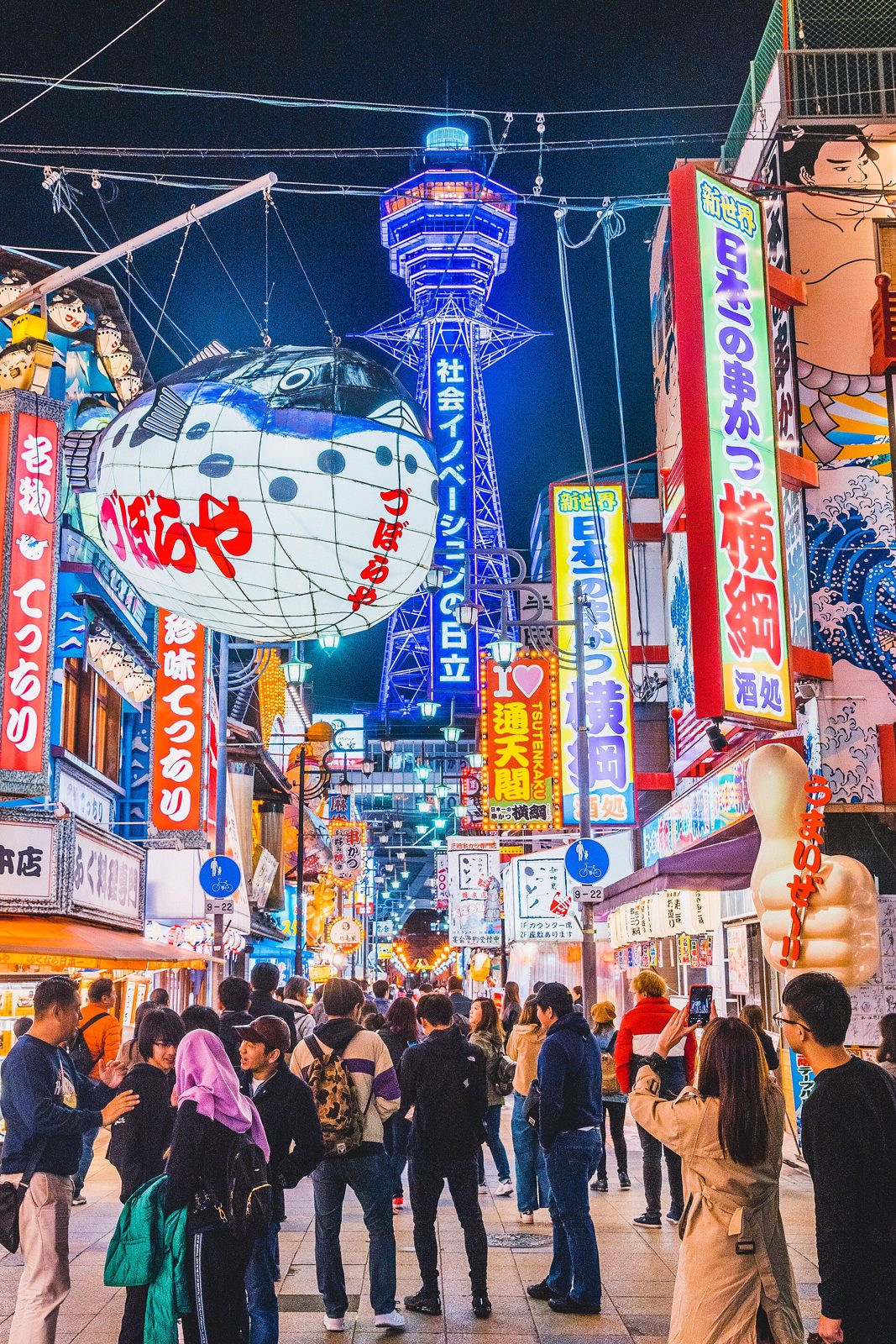
Evening, when the signs are lit. It is one of the few parts of Osaka that looks better in photographs than it does at midday, when the district can look tired.
Janjan Yokocho, the narrow covered alley running south from the tower, keeps older hours than the main streets and is where the shogi and go parlours still are. It is worth walking even if you eat elsewhere.

Getting there
It sits between Shin-Imamiya and Ebisucho, just south of Tennoji. The approach from Abeno Harukas takes about fifteen minutes on foot and passes through Tennoji Park, which is worth the walk.
The district was laid out for a national exposition in 1903 and built up in 1912 with a Paris-inspired north half and a Coney Island-inspired south half. That division is still legible in the street plan if you look for it.
.jpg)
If you only have an hour
Walk the main arcade from end to end under the tower, look up at the sign wall, and eat kushikatsu at a counter. Skip the tower unless you specifically want the view — Umeda Sky and Abeno Harukas both give you more for the money.
What people get wrong
The no-double-dipping rule is real and it is not a tourist joke. The communal sauce pot at a kushikatsu counter is shared by everyone at the bar; a skewer goes in once, before you bite it. Use the shredded cabbage as a scoop if you want more sauce. Every counter has a sign about it, and the signs are there because it matters.

Nearby
Ticketing arrangements and opening patterns as published and checked on 5 September 2026. These change without much warning — confirm with the place itself before you travel. More sights, and how they fit together, in Landmarks & Sights.