
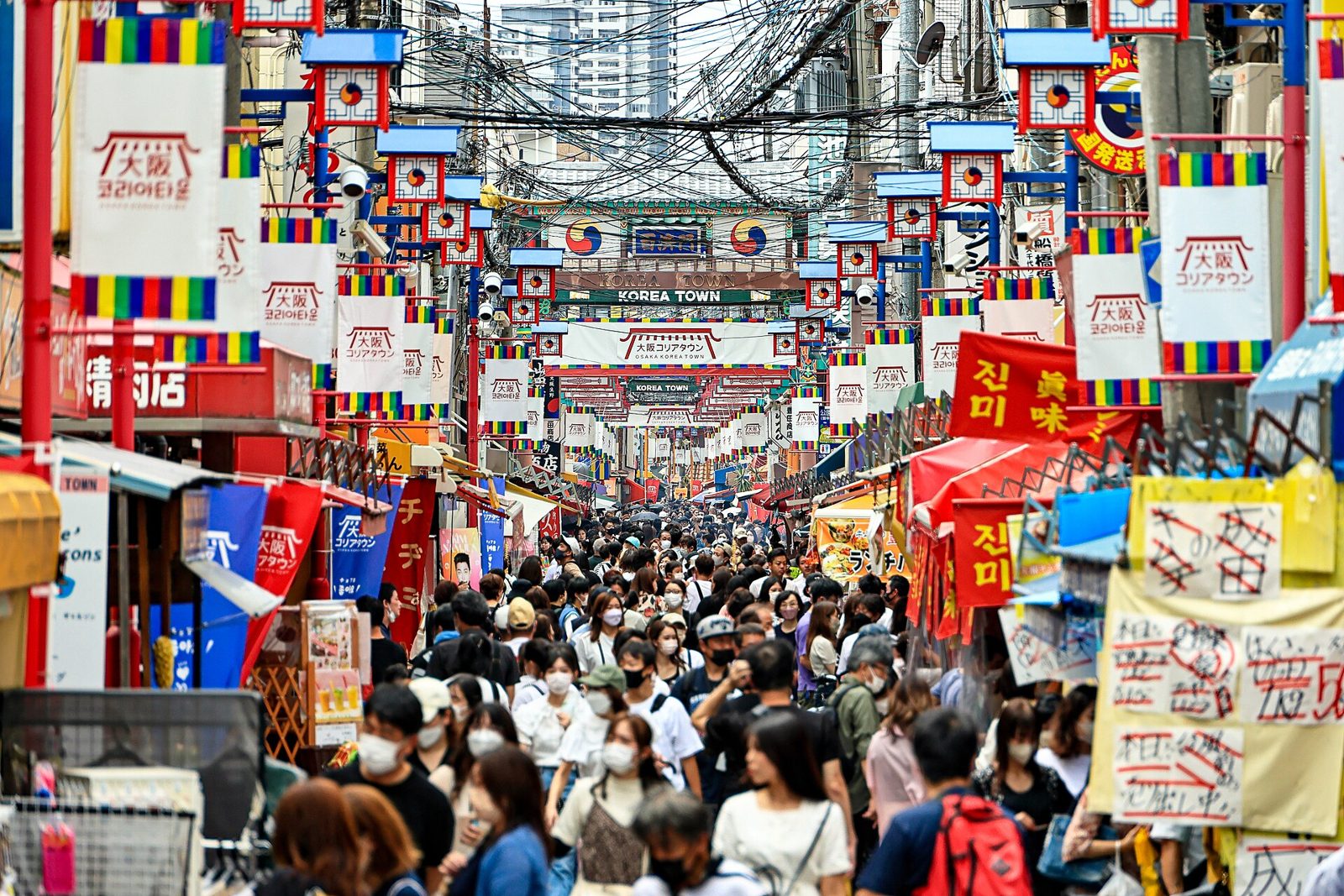
A dense warren of covered market lanes around the station, and the heart of the largest Korean community in Japan. Free to walk, and the strongest smell of any place on this list.
What it costs
Free. The market lanes are public streets. What you spend is on food and on kimchi to take away, and both are cheap by Osaka standards.
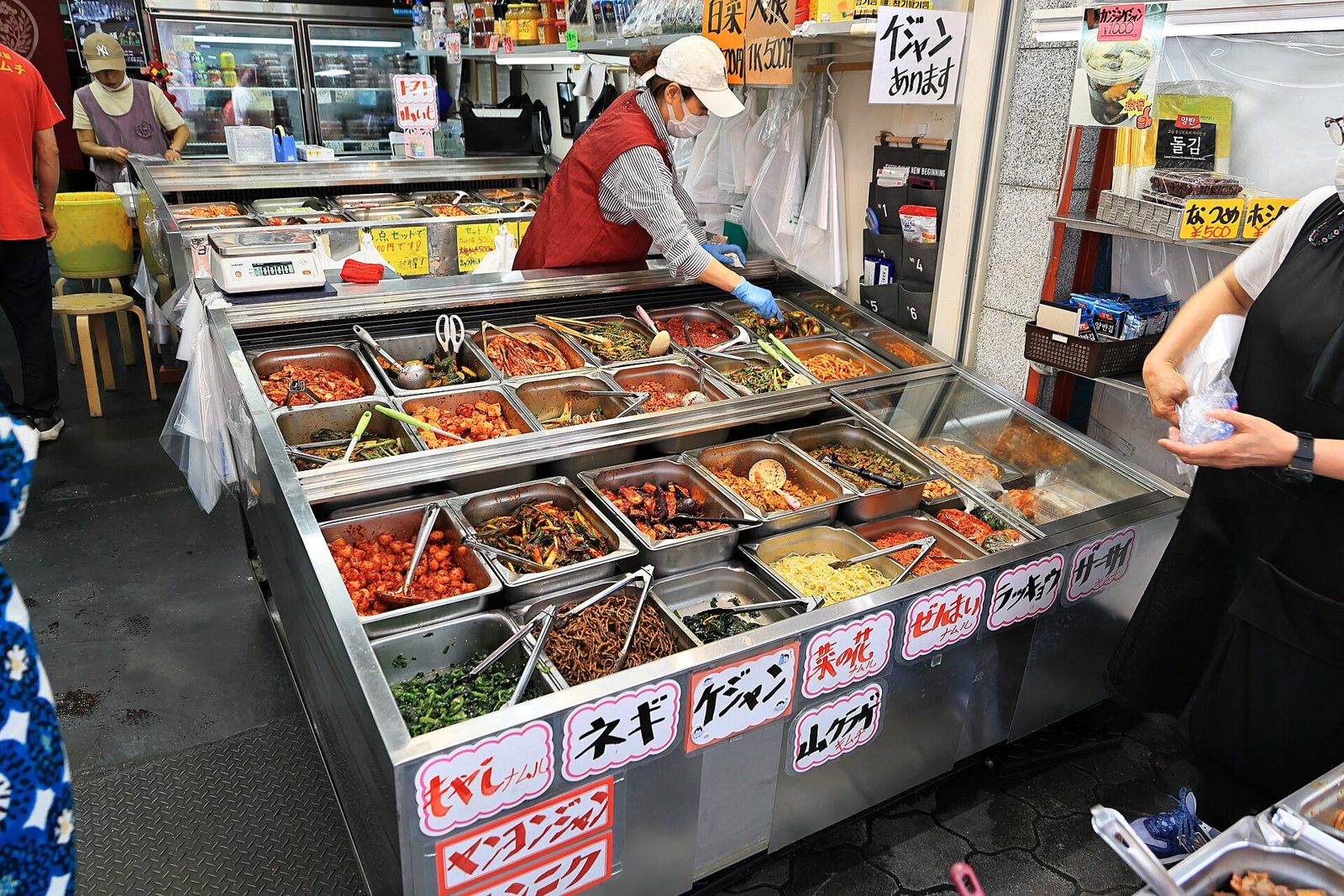
Kimchi is sold by weight from open tubs and is the thing most people take away. Yakiniku here is priced for the neighbourhood rather than for visitors, and is among the better value meals in the city.
When to go
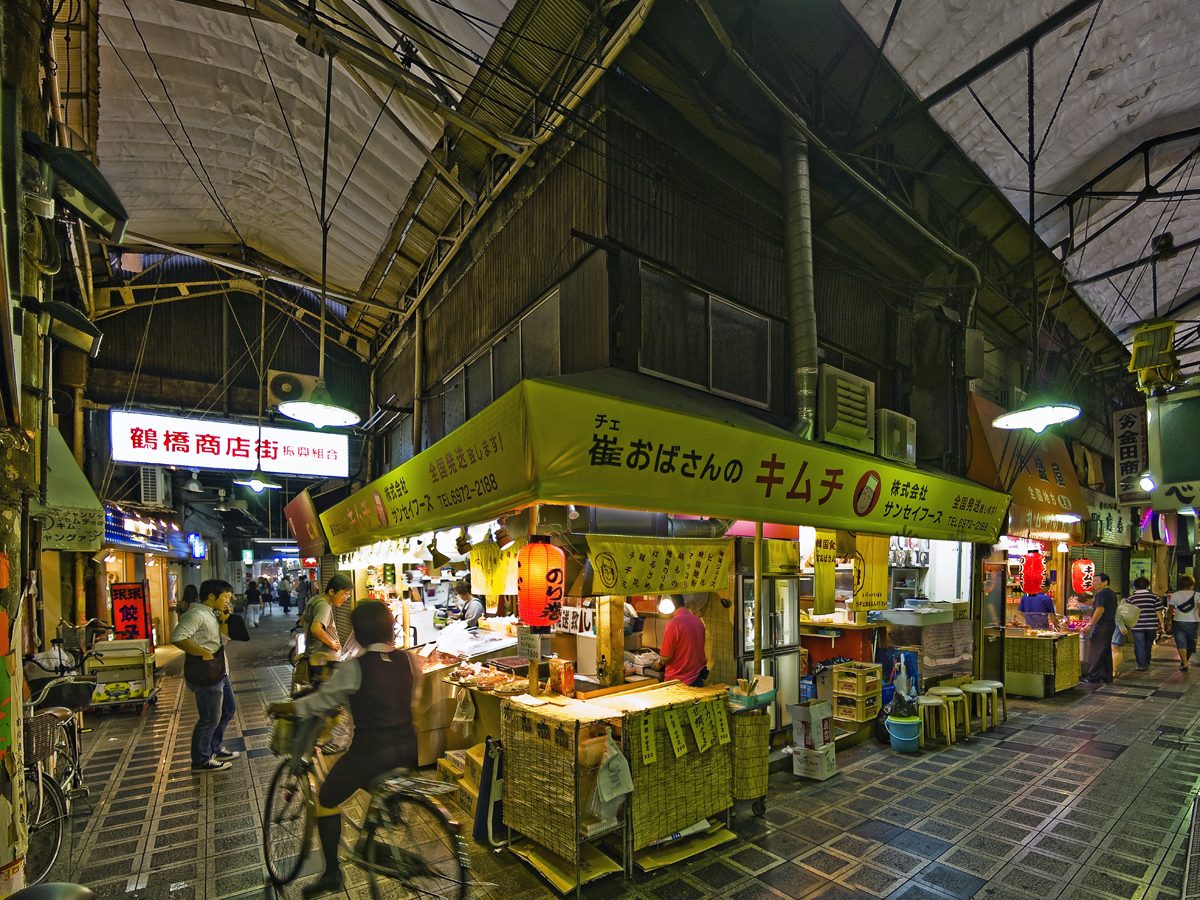
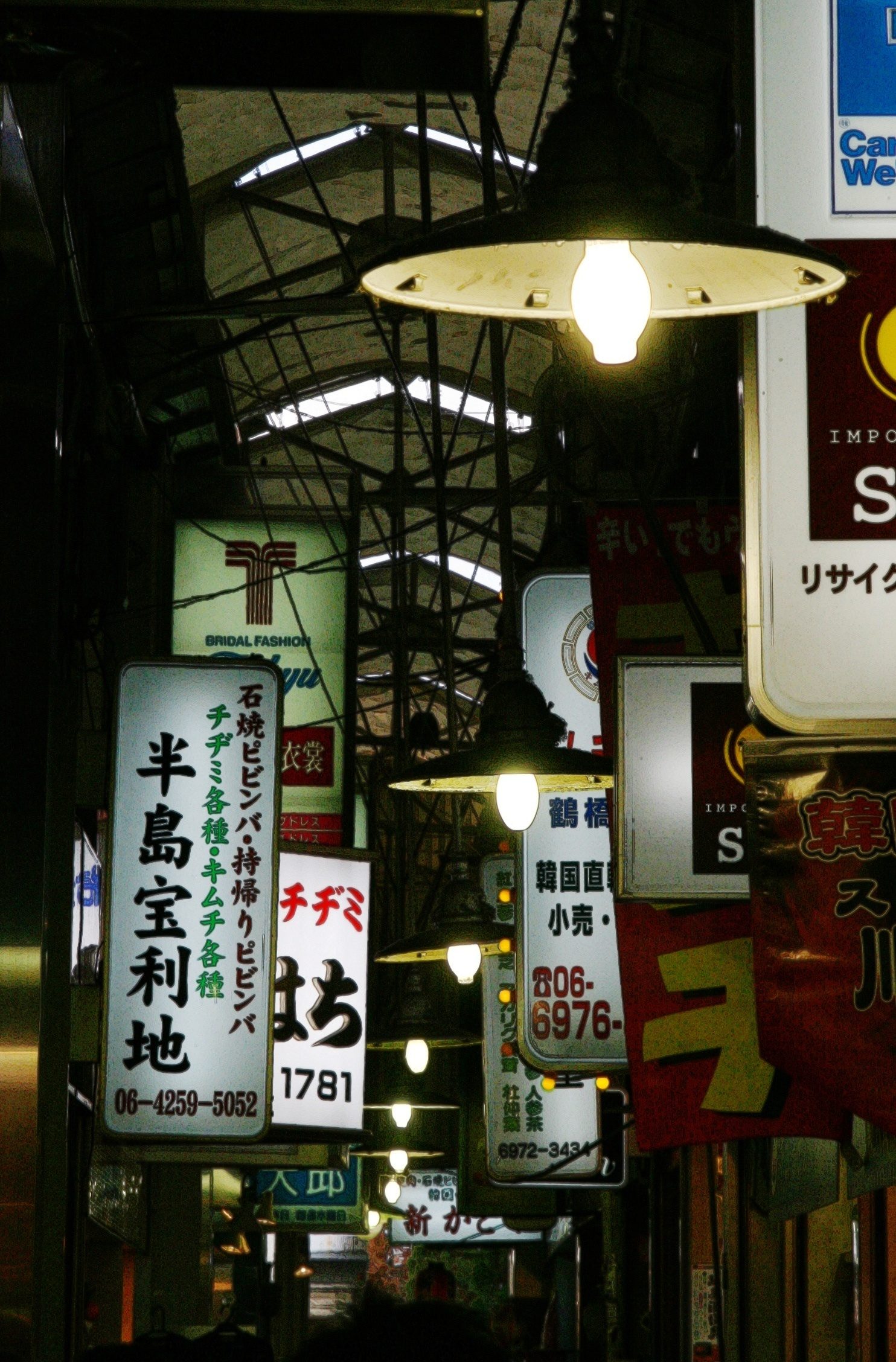
Late morning to mid-afternoon, when the market is fully open. Many of the stalls close earlier than a visitor expects, and the covered lanes are genuinely dark by early evening.

Getting there
It is east of the centre, and the market begins the moment you leave the station — unusually for Osaka, there is no walk to speak of.
The market grew up around the station in the years after the war and was never planned, which is why the lanes meet at odd angles and the roofing changes height as you walk. Following it by map does not work; following your nose does.

If you only have an hour
Get deliberately lost in the covered lanes for twenty minutes, then eat. The lanes are narrow and interconnected and finding your way out is part of it.
If you want the photographed version — the shopfronts, the Korean cosmetics, the hotteok stalls — walk on to Miyukidori, five minutes east. Tsuruhashi market itself is older, tighter and less arranged, and it is the more interesting of the two.
What people get wrong
This is not a themed tourist quarter. Ikuno’s Korean community dates from the 1920s and the market serves it; the Miyukidori shopping street a few minutes away is the more visitor-facing ‘Korea Town’ with the shopfronts people photograph. Tsuruhashi market itself is a working market and should be treated as one.

Nearby
Ticketing arrangements and opening patterns as published and checked on 5 September 2026. These change without much warning — confirm with the place itself before you travel. More sights, and how they fit together, in Landmarks & Sights.